
What Swift Treatment Reviews Say About Verrucae
A verruca can be tiny, yet make every run, school walk or day in work shoes feel like you are treading on a stone. If you are reading Swift treatment reviews because acids, home freezing kits or repeated covering have not shifted it, you will probably want a straight answer: does it work, what does it feel like, and is it right for me?
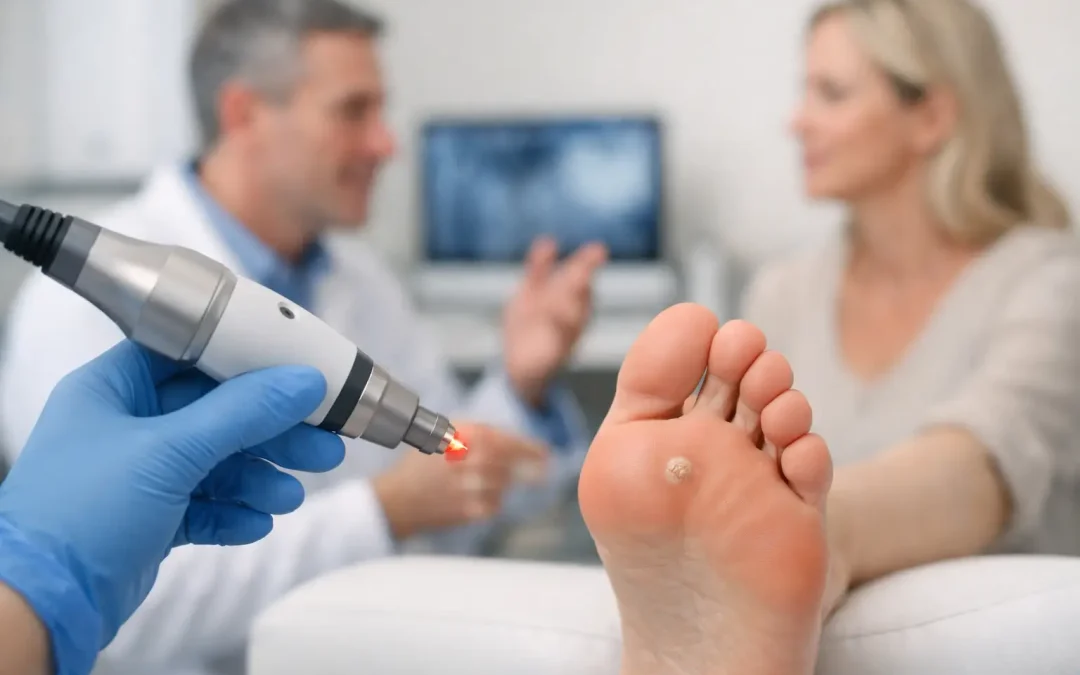
Swift is a podiatry treatment that uses controlled microwave energy to stimulate the body’s immune response to the virus that causes a verruca. Reviews can be useful, especially when a verruca has become painful or persistent. However, the most helpful reviews are not simply those that promise a quick fix. They describe the starting problem, the number of sessions needed, the level of discomfort and what happened over the following weeks and months.
What Swift treatment reviews can tell you
Patient feedback often highlights why people choose Swift in the first place. Many have already tried treatments at home, pharmacy products or other clinical options without getting the result they wanted. They may be frustrated by a verruca that has lasted for years, affects sport, or is difficult to manage around work and family life.
Swift treatment is delivered in short bursts through a small handheld probe. It does not involve cutting out the verruca or relying on an open wound to heal. That can appeal to patients who want an advanced clinical option without prolonged dressings or a major interruption to normal routine.
Reviews may also mention convenience. Appointments are usually brief, and there is often little visible change immediately afterwards. But convenience should not be confused with a guaranteed one-visit solution. Verrucae are caused by a virus, and every immune system responds differently. A small, recent verruca may behave very differently from a long-standing mosaic verruca spread across a weight-bearing area of the foot.
The best feedback gives context. A review saying, “my verruca cleared” is encouraging, but it is more useful when it explains whether the lesion was painful, how long it had been present and when clearance was confirmed. A review that says treatment was uncomfortable but manageable, followed by gradual improvement, may be more realistic and more valuable than one that focuses only on the day of treatment.
The questions behind positive Swift treatment reviews
Most positive experiences come down to more than the technology itself. Careful assessment, correct diagnosis and a clear treatment plan all matter. A lesion that looks like a verruca is not always a verruca. Corns, callus, foreign-body reactions and other skin changes can cause similar symptoms, particularly when there is pressure under the foot.
Before recommending treatment, a podiatrist should examine the area and consider its location, size, duration and impact on your daily life. They should also ask about your general health, circulation, sensation and any previous treatments. This is particularly important for people with diabetes, reduced sensation, poor circulation or a weakened immune system, where a more cautious and individual approach may be needed.
A worthwhile consultation should leave you knowing why Swift has been suggested and what the alternatives are. Depending on your circumstances, these may include careful reduction of hard skin, topical treatments, needling or simply monitoring a painless verruca. There is no single best treatment for every person or every lesion.
At Eclipse Foot Clinic, the aim is to make that decision clear rather than push one treatment. An HCPC-registered podiatrist can assess the problem properly, explain what can realistically be achieved and help you choose a route that fits your health, comfort and priorities.
How many Swift sessions are normally needed?
This is one of the biggest reasons to read beyond the headline of a review. Swift treatment is commonly planned as a course, rather than judged after one appointment. The exact number of sessions and the spacing between them depend on the verruca and how it responds.
Some patients see changes earlier than others. The verruca may become less tender, its surface may alter, or the normal skin lines may begin to return as it resolves. In other cases, there may be little obvious visible change at first, even though the body is responding beneath the surface. Follow-up assessment is therefore more meaningful than checking the area every day and expecting it to disappear overnight.
Ask the clinic how progress will be measured, when your treatment plan will be reviewed and what happens if the response is slower than expected. Honest answers are a good sign of a patient-centred service.
Does Swift treatment hurt?
Most candid Swift treatment reviews mention a sharp, intense sensation during each application. The burst itself is very short, but the feeling can be stronger on sensitive or weight-bearing areas. People describe it differently, and pain tolerance varies considerably.
There may be short-lived tenderness afterwards, especially when walking on the treated area. Most people continue their day as normal, but it is sensible to plan around an important race, long hike or demanding sporting event if the verruca is in a pressure point. Your podiatrist can advise on footwear, activity and what level of post-treatment discomfort would be expected for you.
Swift is not necessarily the right choice simply because it avoids an incision. If anxiety about discomfort is your main concern, say so at the consultation. A good clinician will talk through the sensation honestly and discuss whether another treatment would suit you better.
How to read reviews with a clinical eye
Online reviews are personal experiences, not clinical evidence. They can show whether patients felt listened to, whether they understood the process and whether a clinic handled follow-up well. They cannot predict your individual outcome.
Look for patterns rather than one dramatic story. Consistent comments about clear explanations, professional assessment and realistic expectations are meaningful. So are reviews from people with a similar concern, such as a stubborn plantar verruca affecting running or a painful lesion making everyday footwear difficult.
Be cautious with claims that suggest all verrucae disappear after one treatment or that a particular method works for everyone. Even advanced treatments need the right diagnosis, appropriate patient selection and time for the immune response to develop. A responsible provider will explain uncertainty as well as potential benefits.
It is also worth remembering that untreated verrucae can sometimes resolve naturally, while others persist. If a review does not state what else was being done at the same time, such as home treatment or regular hard-skin reduction, it may be hard to know which factor made the difference.
When a consultation matters more than a review
Swift may be worth discussing if your verruca is painful, spreading, longstanding or stopping you from enjoying sport and everyday activities. It can also be a sensible option for people who have had limited success with standard treatments and want an informed discussion about another approach.
However, do not self-diagnose based on photographs or another person’s review. Book an assessment promptly if a lesion is bleeding, changing quickly, unusually painful, infected or if you have diabetes, poor circulation or reduced feeling in your feet. These situations need professional assessment before any treatment is considered.
Bring a short history to your appointment: when you first noticed the lesion, treatments you have tried, whether it has spread and how it affects walking, exercise or footwear. That information helps your podiatrist build a practical plan rather than simply repeat a treatment that has already failed.
The right review may give you confidence to ask about Swift, but the right assessment tells you whether it is a sensible next step. For a troublesome verruca, that clarity can be the first move towards walking, training and wearing your favourite shoes comfortably again.