
Diabetic Neuropathy Screening for Healthier Feet
A small stone in a shoe, a blister from a new pair of trainers or a cut you barely notice should not become a serious problem. Yet when diabetes affects sensation in the feet, these everyday irritations can be missed until they have progressed. Diabetic neuropathy screening is designed to identify reduced feeling, circulation concerns and changes in foot shape before they put your mobility at risk.
Neuropathy does not always announce itself with pain. Some people notice tingling, burning or electric-shock sensations, particularly at night. Others develop numbness and may not feel pressure, heat or a minor injury as clearly as they once did. That loss of protective sensation is why regular foot checks are such a valuable part of managing diabetes.
What diabetic neuropathy screening looks for
Diabetic peripheral neuropathy is nerve damage that most commonly affects the toes and feet. Persistently raised blood glucose is one contributor, although blood pressure, cholesterol, smoking, kidney health and how long someone has lived with diabetes can also affect risk. It can occur in people with either Type 1 or Type 2 diabetes.
A podiatry assessment is not simply a quick look at the soles of your feet. It brings together what you can feel, what your clinician can see and how well blood is reaching the tissues. The aim is to establish your individual level of risk and give you a practical plan for protecting your feet.
Your podiatrist will usually ask whether you have experienced numbness, pins and needles, burning, cramps, balance changes or pain that is worse at night. They will also discuss previous ulcers, infections, foot surgery, footwear, activity levels and how easily you can inspect and care for your own feet.
The physical examination may include:
- checking the skin for dryness, cracks, callus, corns, blisters, fungal infection, pressure areas and wounds;
- assessing foot shape and toe deformities, as prominent areas can rub inside footwear;
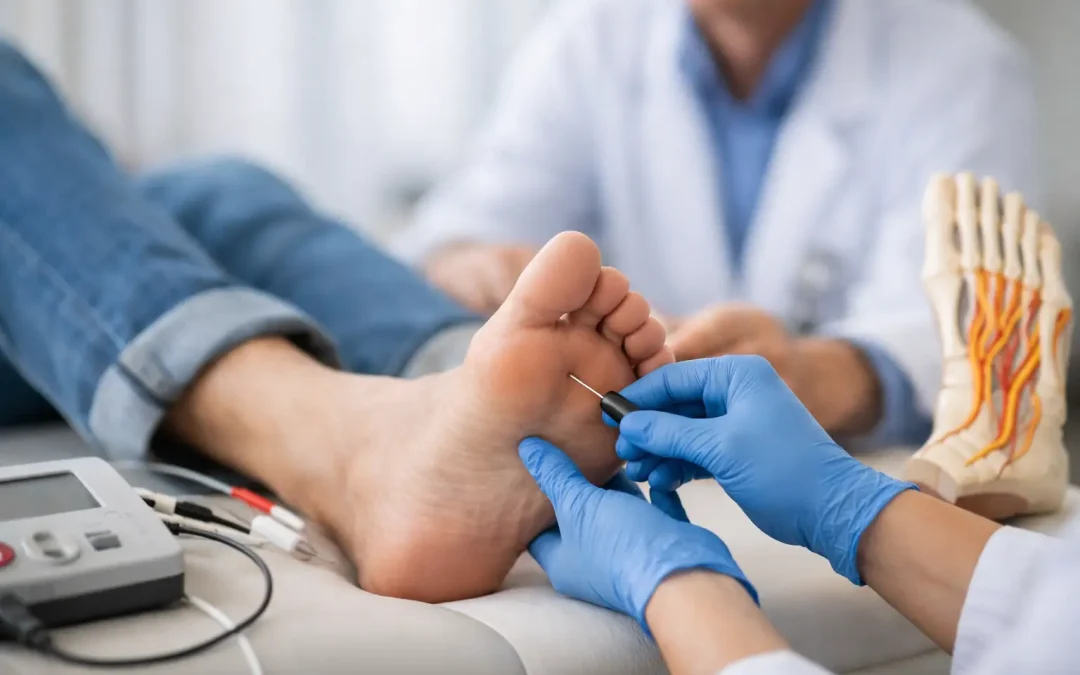
- testing sensation at carefully selected points with a fine monofilament and, where appropriate, vibration testing with a tuning fork;
- checking circulation by feeling foot pulses, reviewing skin temperature and colour, and considering any symptoms of poor blood flow;
- looking at movement, balance and how you walk, especially if pressure is building in one area.
These tests are straightforward and should not be painful. A monofilament is a small nylon fibre that is gently touched against the skin. It helps assess whether you can reliably feel light pressure. Vibration testing offers another useful picture of nerve function. Neither test works in isolation: the clinical value comes from interpreting the results alongside your medical history, skin condition, circulation and footwear.
Why early screening can make a major difference
The main concern is not neuropathy alone, but what can happen when reduced sensation combines with pressure, rubbing, poor circulation or delayed healing. A person who cannot feel a hot water bottle, a tight seam in a sock or a sharp object in their shoe may develop skin damage without realising it. If the area becomes infected or fails to heal, treatment can become more complicated.
Early identification gives you choices. It may mean regular preventative podiatry, professional removal of hard skin that is creating pressure, more suitable footwear, targeted insoles or a closer review schedule. If symptoms suggest a circulation issue, infection or another cause of nerve pain, your podiatrist can advise on the appropriate next step with your GP or diabetes team.
Screening is also useful when your feet feel completely normal. Neuropathy can develop gradually, and the first detectable changes may be too subtle for you to spot at home. A structured assessment provides a baseline, making it easier to recognise whether your risk is changing over time.
When should you arrange a diabetic foot assessment?
People living with diabetes should have their feet assessed regularly, commonly at least once a year, even when there are no symptoms. The right frequency depends on your risk level. Someone with normal sensation, good circulation and no previous foot complications may only need routine monitoring, while previous ulceration, reduced sensation, foot deformity, kidney disease or poor circulation can mean more frequent review is sensible.
Do not wait for your next planned check if you notice a new problem. Contact a healthcare professional promptly if you find a cut, blister, crack, swelling, redness, warmth, drainage, discolouration or a wound that is not improving. A change in the shape of a foot, particularly with heat or swelling, also needs urgent assessment.
Neuropathic pain deserves attention too. Burning, stabbing pain or persistent tingling can disrupt sleep and affect confidence with walking. It does not necessarily mean that an ulcer will develop, but it is worth discussing. A thorough examination can help distinguish neuropathy from other possible causes, such as a trapped nerve, joint problem or circulation concern.
Screening is only useful when it leads to a plan
A good assessment should leave you knowing what was found and what to do next. If sensation and circulation are reassuring, the focus may be on maintaining good daily habits and returning for review. If risk factors are present, your clinician should explain them plainly, without causing unnecessary alarm.
For example, callus is not always a cosmetic issue. In a numb foot, a thick patch of hard skin can indicate repeated pressure and may hide tissue damage underneath. Reducing that pressure might involve skilled podiatry treatment, changing the fit of a shoe or using an insole designed to redistribute load. The best option depends on your foot shape, activity and the area involved.
At Eclipse Foot Clinic, diabetic foot assessments are carried out by HCPC-registered podiatrists who combine clinical examination with clear, practical advice. Where pain, pressure or walking mechanics are contributing to the problem, further assessment of gait and foot function can help identify the underlying cause rather than simply treating the visible symptom.
Daily checks matter between appointments
Professional screening cannot replace what happens at home. A brief daily look is one of the most effective habits for people with diabetes, particularly when sensation is reduced. Check the tops, soles, heels and spaces between the toes in good light. A mirror can help with the sole, or a family member can assist if bending or vision is difficult.
Look for changes rather than waiting for pain. New redness, rubbing, broken skin, fluid, swelling or unexpected warmth are all reasons to act. Keep feet clean and dry them carefully, especially between the toes. Moisturiser can help dry skin on the tops and soles, but avoid applying it between toes where excess moisture may encourage skin problems.
Footwear is equally important. Shoes should be deep and wide enough for the toes, secure around the heel and free from rough seams or objects inside. Check the inside before putting them on, especially if your feeling is reduced. Avoid walking barefoot, including around the house or on holiday, as a minor puncture or burn can go unnoticed.
Be cautious with self-treatment. Cutting corns or callus, using acid corn plasters, attempting to manage an ingrown nail or applying heat directly to numb feet can cause damage. Routine nail and skin care from a podiatrist is a safer choice when diabetes or neuropathy is involved.
A reassuring check, not a reason to worry
Hearing the word neuropathy can feel daunting, but screening is about prevention and control. Many people with early changes continue to walk comfortably, exercise and enjoy normal day-to-day life by protecting their feet and attending the right reviews. Good diabetes management remains central, alongside attention to blood pressure, cholesterol and stopping smoking where relevant.
If you have diabetes and have not had your feet checked recently, arranging an assessment is a practical first step. A calm, thorough examination can replace uncertainty with a clear plan – and help keep small foot problems from interrupting the things you enjoy.