
Custom Orthotics: Support Built Around You
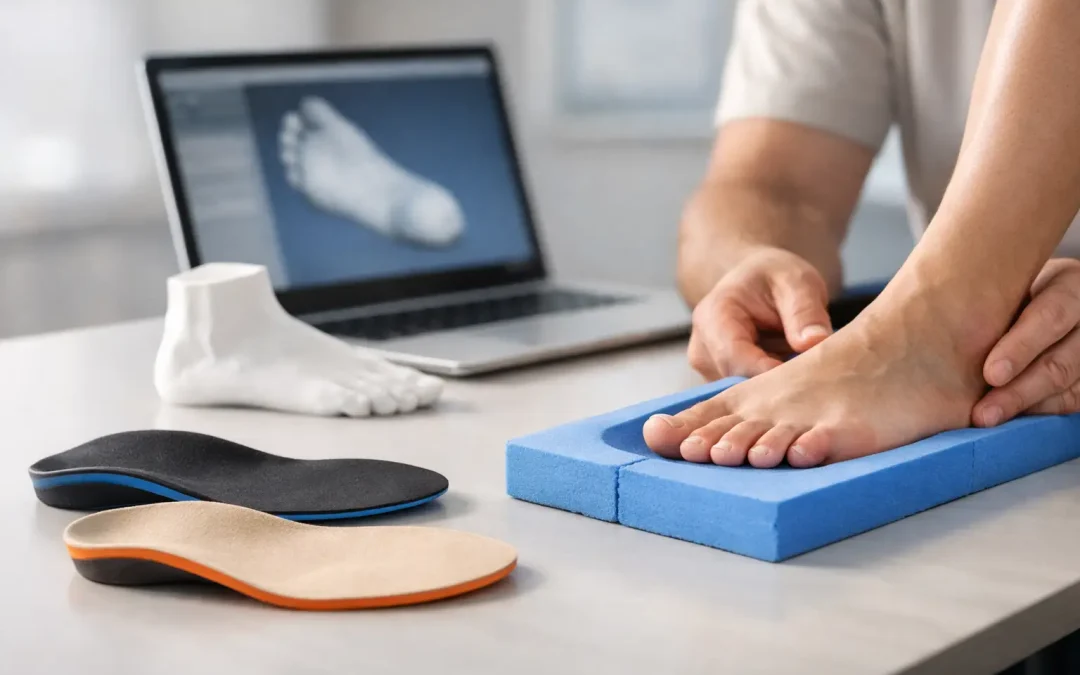
A run that starts comfortably but ends with heel pain. A long day at work that leaves your knees aching. A recurring sore spot beneath the ball of your foot that makes favourite shoes difficult to wear. These are the kinds of problems custom orthotics are designed to address – not by simply adding cushioning, but by changing how your feet and lower limbs are supported as you move.
At Eclipse Foot Clinic, orthotics are rarely prescribed from a shelf. If they are, the generic device is modified for your particular problem. We begin by understanding what hurts, when it hurts and what you need to get back to, whether that is walking the dog, training for an event, keeping up at work or enjoying everyday life without thinking about every step.
What are custom orthotics?
Custom orthotics are prescription devices worn inside your shoes. They are made to support, redistribute pressure or influence foot and lower-limb movement according to your individual needs. They may be referred to as bespoke insoles, but they are not the same as generic cushioned insoles bought from a pharmacy or sports shop.
A well-designed orthotic does not aim to force every foot into an identical “perfect” position. Feet vary greatly, and many differences in foot shape are entirely normal. The purpose is to make a meaningful change where your movement, loading pattern or foot structure is contributing to pain, repeated strain or reduced function.
For some patients, that means supporting the arch and reducing stress on the plantar fascia. For others, it means relieving pressure from a painful forefoot, improving stability around the ankle, or helping the knee and hip work more comfortably during walking or running. The right approach depends on the diagnosis, the activity and the footwear you realistically wear. m
When can custom orthotics help?
Orthotics can form part of a treatment plan for a broad range of foot, ankle and lower-leg concerns. Heel pain and plantar fasciitis are common reasons to consider them, particularly when symptoms persist despite sensible changes to activity, shoes and stretching. They can also help with metatarsalgia, painful corns caused by excessive pressure, Achilles tendon problems, shin pain and some forms of knee discomfort linked to lower-limb mechanics.
Active people often seek assessment after pain begins to limit running, gym sessions, golf or long walks. A runner may have a different requirement from someone standing for eight hours at work, even if both have pain in a similar location. Training load, running surface, footwear, previous injuries and strength all matter.
Orthotics may also be useful for people with arthritis, foot deformities, instability, leg-length differences or diabetes-related pressure concerns. In these situations, reducing local pressure and protecting vulnerable areas can be as important as controlling pain. A podiatrist will consider skin health, circulation, sensation and footwear alongside biomechanics.
They are not automatically the answer to every painful foot. If a problem is caused by a stress fracture, nerve irritation, inflammatory condition, skin lesion or acute injury, an orthotic alone may be inappropriate or insufficient. A proper assessment is what separates targeted treatment from guesswork.
Your orthotic assessment: finding the cause
Pain is a useful signal, but it does not always identify the source of the problem. Heel pain, for example, may involve the plantar fascia, a nerve, the heel fat pad, the Achilles tendon or another structure altogether. Treating all heel pain in the same way can delay recovery.
Your podiatrist will start with a detailed history. We will ask about your symptoms, activity, work, previous injuries, medical history and the shoes you wear most often. The timing of pain can be particularly revealing: first-step pain in the morning, discomfort after a certain distance, or symptoms that build after standing all point us in different directions.
This is followed by a clinical examination of your feet, ankles and lower limbs. We assess joint movement, muscle strength, alignment, areas of tenderness and how your body responds to loading. Video gait analysis can show how you walk or run in motion, rather than relying only on a static footprint. Where clinically indicated, diagnostic ultrasound can provide further information about tendons, fascia and other soft tissues.
The result should be a clear explanation, not a vague recommendation to “wear insoles”. If custom orthotics are likely to help, you should understand what they are intended to do, how they fit into your wider treatment plan and what improvement is realistic to expect.
Bespoke devices, including 3D-printed insoles
There is no single best material or design. Some orthotics need to be firm enough to control excessive motion or provide reliable support in a walking shoe. Others need more cushioning to protect a painful area or accommodate an arthritic foot. A sports orthotic may be shaped differently from one intended for work boots, school shoes or smart footwear.
At Eclipse Foot Clinic, bespoke options include true 3D-printed insoles. This technology allows the device to be designed with a high level of precision, matching support and pressure-relief features to the assessment findings. It can be particularly valuable where a conventional device is too bulky, too rigid or poorly suited to the demands of a patient’s shoe and activity.
The best orthotic is the one that you can wear consistently and that addresses the clinical problem. A beautifully engineered device is of limited value if it does not fit your everyday footwear. Bring the shoes you use most often to your appointment where possible, especially trainers, work shoes or boots. This helps us advise on fit and choose a design that works in real life.
What to expect when you start wearing them
Most people need a short adjustment period. Orthotics alter the way forces pass through your feet and legs, so it is normal to notice the device at first. You may feel increased contact under the arch or around the heel, but it should not cause sharp pain, numbness or worsening symptoms.
Your podiatrist will advise how gradually to build up wear time. This often begins with short periods at home before progressing to longer walks, work or sport. Rushing straight into a full day on your feet or a long run can make it harder to judge how your body is responding.
Improvement is not always immediate. Pressure-related discomfort may settle quickly, while tendon and plantar fascia problems often need several weeks of consistent management. Orthotics work best alongside the other measures appropriate to your condition, which may include strength work, mobility exercises, activity modification, footwear advice, shockwave therapy or another treatment option.
Follow-up matters. Your symptoms, activity and shoes can change, and the device may need adjustment. Children’s orthotic needs also require regular review because their feet and bodies are growing. A good plan is responsive rather than fixed.
Choosing between off-the-shelf and prescription insoles
An off-the-shelf insole can be a sensible first step for mild, short-lived discomfort or when extra cushioning is all that is required. There are good quality options available, and a podiatrist may even recommend one for a specific purpose.
However, generic insoles cannot account for an individual pressure point, a significant asymmetry, a particular gait pattern or a complex combination of symptoms. If pain has lasted for weeks, keeps returning, affects sport or work, or has not improved with self-management, a bespoke assessment is usually the more efficient route.
It is also worth avoiding the temptation to buy multiple insoles in the hope that one will solve the problem. Different designs can produce very different effects. If an insole feels uncomfortable or makes symptoms worse, stop using it and seek advice rather than trying to push through pain.
Persistent foot pain can gradually shrink your world – fewer walks, less exercise, more time choosing shoes around discomfort. The right support should do the opposite: give you a clearer route back to confident, comfortable movement.