
Swift Versus Acid Verruca Treatment: Which Works?
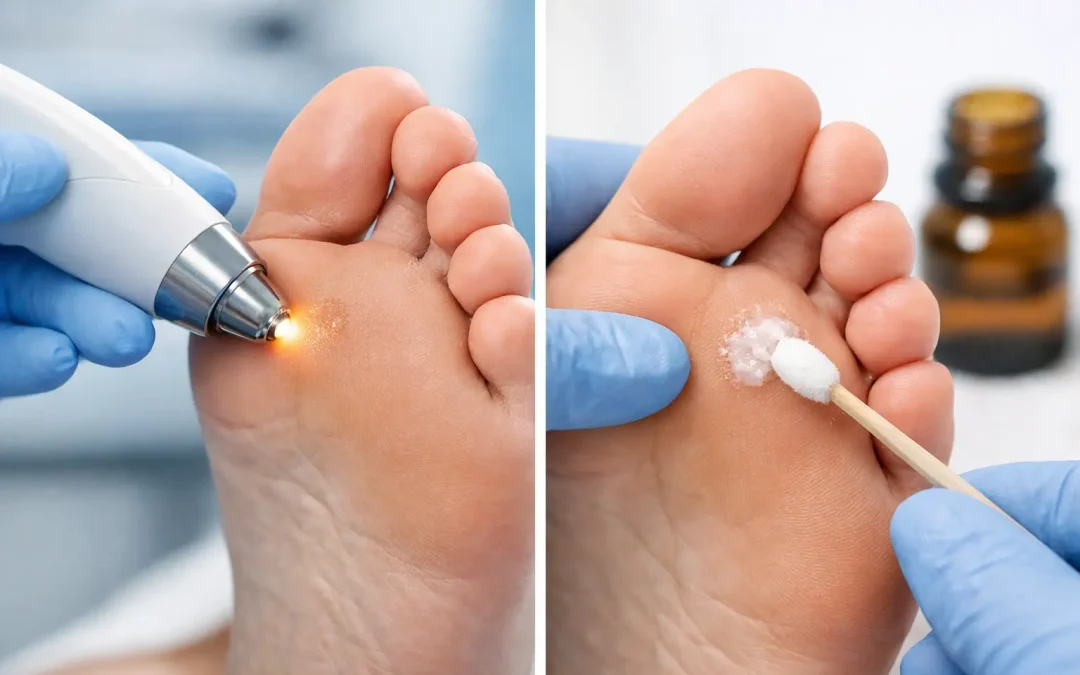
A verruca can be a tiny skin lesion with an outsized impact. It may hurt every time you put weight through the foot, make you avoid swimming or changing rooms, and become particularly frustrating when shop-bought remedies have been used for months without success. When comparing Swift versus acid verruca treatment, the right answer is rarely about choosing the newest option by default. It is about the type of verruca, how long it has been present, your comfort, your health and what has already been tried.
Verrucae are caused by strains of the human papillomavirus (HPV). They commonly develop on pressure areas of the sole, where they can be pushed inwards by walking. A podiatry assessment matters because corns, callus and other skin lesions can sometimes look similar. Once we are confident of the diagnosis, we can discuss treatment choices clearly and honestly.
Why verrucae can be hard to shift
The body ultimately clears a verruca through its immune response, but this does not always happen quickly. Some resolve without treatment, particularly in children, while others remain painful or spread across the foot. Pressure, skin trauma and picking can all make them more troublesome.
A long-standing verruca is not necessarily a sign that you have done anything wrong. It can simply mean that the virus has avoided attracting enough immune attention. Treatment aims either to gradually remove infected skin, trigger an immune response, or use a combination of both approaches.
Acid treatment for verrucae
Acid treatment usually refers to preparations containing salicylic acid. These may be available over the counter at lower strengths, while podiatrists can use stronger preparations and carefully protect the surrounding healthy skin. The acid softens and breaks down the thickened, virus-infected surface skin over time.
For many straightforward verrucae, acid is a sensible first-line option. It is established, relatively affordable and can work well when used consistently. The key word is consistently. Home treatment often involves daily application for a number of weeks, with regular removal of softened dead skin.
Professional acid treatment may involve appointments at intervals, alongside a home-care plan. We can reduce hard skin safely, assess whether the verruca is responding and adjust the approach if it is not. This is particularly useful when a lesion is painful, difficult to reach or hidden beneath a thick layer of callus.
Acid does have drawbacks. It can irritate healthy skin if it spreads beyond the verruca, and it requires patience. It may not be suitable for everyone, especially people with poor circulation, reduced sensation, diabetes-related foot risks or fragile skin, unless it is being managed as part of a clinician-led plan. Children may also find daily treatment difficult to tolerate or keep up with.
Swift versus acid verruca treatment: the key difference
Swift treatment uses precisely delivered microwave energy to treat the verruca through the skin. Rather than burning or cutting the lesion away, it creates a controlled local response intended to stimulate the body’s immune system to recognise the virus.
A Swift appointment is brief. The microwave energy is delivered in short bursts directly to the verruca, without the need for local anaesthetic, dressings or a wound afterwards. Most people can walk out of the clinic and return to normal footwear and activity straight away. The treatment itself can feel sharp or intense for a few seconds, so it is not pain-free, but the sensation is short-lived.
Unlike acid, Swift does not rely on you applying a product every day or on progressively peeling away layers of skin at home. This can make it appealing for busy adults, active people and families who want a more appointment-led treatment route. It may also be considered for persistent verrucae that have not responded to regular acid treatment.
However, Swift is not an instant cure and it is not guaranteed to work for every patient. Verrucae can need a course of treatments, commonly spaced several weeks apart, because the immune response takes time. The number of sessions depends on the lesion, its duration, whether there are multiple verrucae and how your body responds. A clinician should explain the likely treatment plan and review progress rather than promise a fixed outcome.
Comfort, recovery and convenience
Acid tends to cause lower-level irritation that can last longer, particularly if the surrounding skin becomes sore. Its trade-off is the daily commitment. Missing applications or stopping as soon as the surface looks better can reduce the chance of success.
Swift creates a much briefer but more intense treatment sensation. There can be tenderness during the appointment, especially on weight-bearing areas, but there is usually no open wound and no period of restricted activity. For runners, gym-goers and people who spend long days on their feet, that minimal disruption can be a significant advantage.
Cost is also part of the decision. Acid treatment is generally less expensive, especially when managed at home. Swift involves specialist equipment and clinical appointments, so the upfront cost is higher. The most cost-effective option is not always the cheapest treatment per session. A treatment that fits your routine and is completed properly may offer better value than one that is repeatedly started and abandoned.
Which option is likely to suit you?
Acid may be the better choice if your verruca is small, newly developed, not severely painful and you are happy to follow a consistent home programme. It can also be a sensible starting point when time and budget are priorities.
Swift may be worth considering if the verruca is persistent, painful, recurring or affecting sport, work or confidence. It can suit people who have already tried acids carefully without success, or who would prefer not to manage daily applications. Some patients also choose Swift because they want treatment that does not leave a wound or require a dressing.
There are situations where neither should be started without assessment. If you have diabetes, peripheral neuropathy, impaired circulation, take medication that affects healing, are immunosuppressed, or are unsure that the lesion is a verruca, seek podiatric advice first. A black spot, changing pigmented lesion, ulcerated area or rapidly growing lump needs appropriate clinical assessment rather than self-treatment.
The value of a proper verruca assessment
At Eclipse Foot Clinic, assessment is not simply about pointing to a treatment machine or handing over an acid preparation. We examine the lesion, reduce overlying hard skin where appropriate and identify whether pressure is contributing to pain. We will also ask how long it has been present, what treatments you have tried and whether it is stopping you from doing the things you enjoy.
That conversation helps us give you unbiased choices. Some people are best served by a simple, structured acid programme. Others may benefit from Swift technology, especially where convenience, persistence or previous treatment failure changes the balance. Occasionally, monitoring is the right option if a painless verruca is already showing signs of resolving.
Getting the best from either treatment
Whichever route you choose, avoid cutting or digging at a verruca yourself. This can create skin injury and may spread the virus. Keep feet clean and dry, avoid sharing towels or footwear, and consider wearing pool shoes in communal wet areas. Do not pick at the lesion, even if it becomes dry or flaky.
It is also sensible to avoid assuming that treatment has failed too early. Verrucae may change in appearance before they clear, and tenderness can come from pressure-related callus around the lesion rather than active viral tissue alone. Planned review appointments allow treatment to be adjusted based on what we can see clinically.
A verruca should not dictate how comfortably you walk, exercise or enjoy your day. Whether acid or Swift is the better fit, a clear diagnosis and a treatment plan you can realistically follow give you the best chance of moving forward with confidence.