
Is Video Gait Analysis for Runners Worth It?
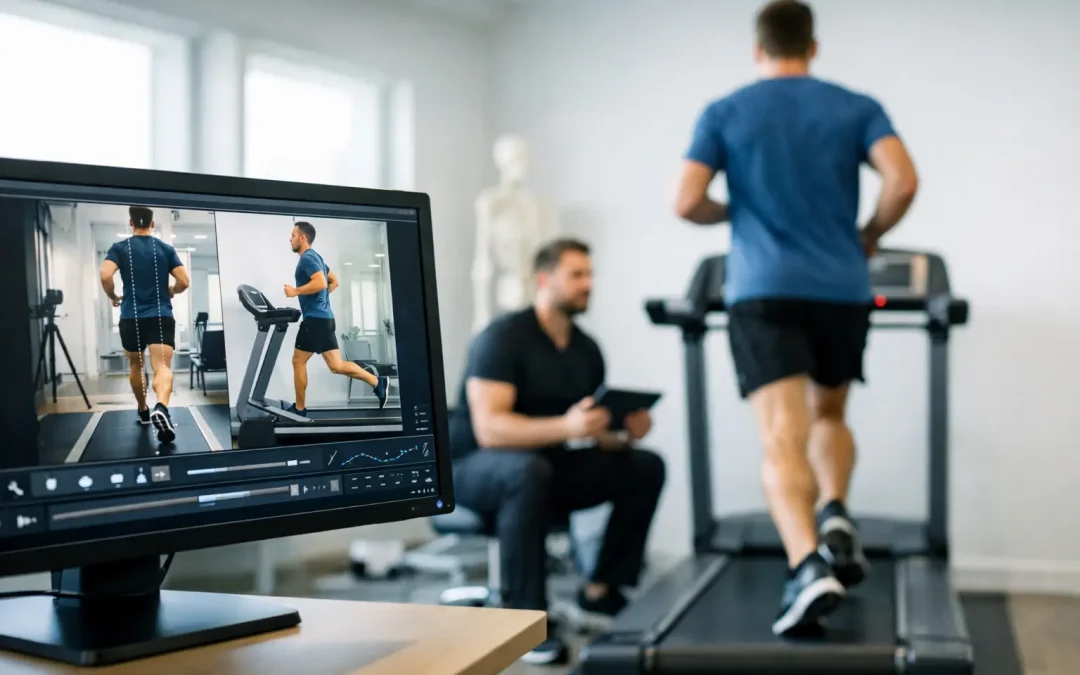
A familiar pattern for runners is pain that appears at the same point in a run: the heel that aches after three miles, the knee that complains on hills, or the shin that tightens whenever training increases. Video gait analysis for runners gives us a clear view of what the body is doing while you move, rather than relying on symptoms alone.
Running discomfort is rarely explained by one body part in isolation. Your feet, ankles, calves, knees, hips and trunk all work together with every stride. A detailed assessment can help identify movement patterns that may be contributing to overload, then turn those findings into a practical plan to keep you moving with greater confidence.
What is video gait analysis for runners?
Video gait analysis records you walking and running, usually from several angles and at a pace that reflects your normal movement. The footage can then be reviewed carefully, often frame by frame, alongside a hands-on assessment of your joints, muscles, footwear and running history.
It is not about finding a single ‘perfect’ running style. Runners come in many shapes, speeds and stride patterns, and a movement that looks unusual is not automatically a problem. The clinical value comes from comparing what we see with where you feel pain, your training load, previous injuries and the demands of your chosen sport.
For example, the recording may show that one foot rolls in more than the other, that your knee drifts inwards as you fatigue, or that limited ankle movement is changing how you load your calf and forefoot. These are clues, not verdicts. They help a podiatrist decide which areas need further testing and which changes are most likely to be useful.
When a running assessment can help
A gait assessment can be useful for runners with persistent or recurring pain, particularly when rest, stretching or changing trainers has not solved the problem. It may also help if an injury returns whenever you build mileage, speedwork or hill sessions.
Common reasons to book include heel pain and plantar fasciitis, Achilles tendon pain, calf tightness, shin pain, pain around the kneecap, forefoot pain, ankle instability and symptoms affecting the hips or lower back. It can also be worthwhile before a major event if you have a history of injury and want a clearer plan for progressing your training.
You do not need to be training for a marathon. Someone returning to a weekly parkrun after a break may benefit just as much as an experienced club runner. The key question is whether your running is being limited by pain, repeated niggles or uncertainty about why a problem keeps coming back.
Pain is not always caused by the way you run
This is an area where a balanced approach matters. Video can reveal a pattern of movement, but it cannot by itself diagnose a tendon injury, stress fracture or nerve problem. Nor does it prove that a particular gait feature is the cause of your symptoms.
Training errors are often part of the picture. A sudden increase in distance, new intervals, more hills, poor recovery, changes in surface or worn footwear can exceed the capacity of otherwise healthy tissues. Sleep, strength, nutrition, work demands and past injuries also matter. A good assessment considers the whole picture instead of promising that one technique change will fix every problem.
What happens during a video gait assessment?
Your appointment starts with a conversation. We will ask where and when symptoms occur, what changes you have made to your training, which shoes you run in and what you are aiming to get back to. Bringing your usual running shoes and, where relevant, a pair of older trainers can be helpful because their wear pattern may add useful information.
The clinical assessment then looks at the painful area and the way the lower limb functions. This may include checking joint range of movement, muscle strength, tenderness, balance, foot posture and how you stand, squat or rise onto your toes. If your symptoms suggest a condition involving soft tissues, diagnostic ultrasound may sometimes be considered as part of a wider assessment.
You will then be recorded walking and running. Depending on your needs, this may be on a treadmill or over a short running distance. We look at how your feet contact the ground, the position and control of your ankles and knees, pelvic stability, stride characteristics and any clear difference between left and right.
The most useful part is the explanation afterwards. At Eclipse Foot Clinic, we take time to show you relevant footage and explain the findings in plain English. You should leave knowing what may be contributing to your symptoms, what is less likely to matter, and what your options are.
What can the results change?
The answer depends on your diagnosis and goals. For some runners, the priority is temporary load reduction so an irritated tendon, fascia or joint can settle. For others, it is a carefully staged return to running, perhaps beginning with shorter runs, flatter routes or run-walk intervals.
Strength and control work is often central to treatment. A runner with reduced calf capacity may need a progressive loading programme; someone whose knee control deteriorates during single-leg tasks may benefit from targeted hip, thigh and foot-strengthening exercises. These changes are generally more useful when they are specific, manageable and linked to what you need your body to do.
Footwear advice may also be appropriate. That does not necessarily mean buying the most cushioned or most expensive trainer. The right shoe depends on your comfort, running history, foot shape, symptoms and the type of running you do. Sometimes a small adjustment in shoe choice is enough. Sometimes it is not relevant at all.
Where foot mechanics are clearly contributing to overload, bespoke orthotics can be considered. These are not designed to force every foot into the same position. A well-prescribed device aims to alter load or support an area in a way that is comfortable and appropriate for your activity. True 3D-printed insoles can provide a highly tailored option when needed, but orthotics are one possible tool, not an automatic answer.
Technique changes need care
Many runners arrive after being told to land on the forefoot, shorten their stride or increase their cadence. These changes can be useful in selected cases, but they are not risk-free. Shifting suddenly from a heel strike to a forefoot strike, for instance, may increase demand on the calves and Achilles tendon.
If a technique adjustment is recommended, it should be introduced gradually and tested against your symptoms. The aim is not to make you look like another runner. It is to find an approach that feels sustainable and supports your return to the distance, pace or event that matters to you.
Getting the most from your appointment
Come with a clear account of your running over the previous few weeks: distance, frequency, pace, surfaces, hills and any recent changes. Mention previous injuries, current gym work and what happens after a run, not just during it. A brief training diary can reveal patterns that are easy to miss from memory.
It also helps to be honest about your goal. If you are determined to complete an upcoming race, say so. If you simply want to run pain-free with your dog or enjoy a Saturday morning parkrun again, that matters too. Treatment recommendations should fit real life, not an idealised training plan.
A clearer route back to running
Video analysis is most valuable when it leads to decisions you can act on: what to modify now, what to strengthen, whether further investigation is needed and how to rebuild your running without guessing. It replaces vague advice with a more informed starting point.
Your running form will naturally vary with speed, fatigue, terrain and fitness. The goal is not flawless footage. It is a body that can tolerate the running you enjoy, with a sensible plan when it needs a little help getting there.