
Heel Spur vs Plantar Fasciitis Treatment
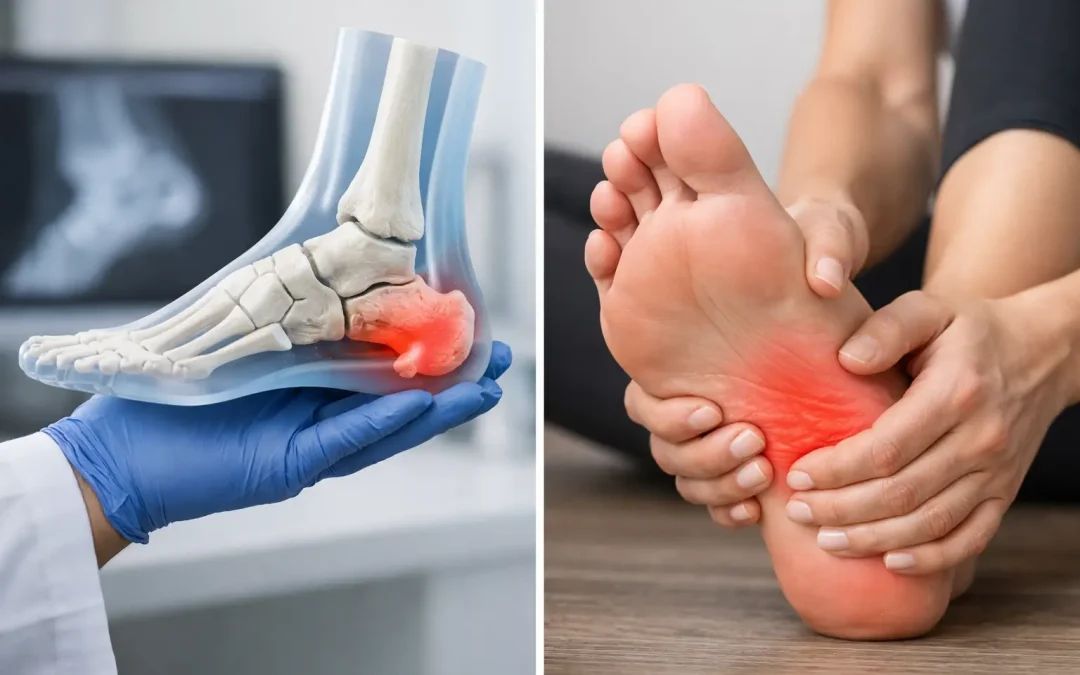
The first few steps out of bed can be remarkably revealing. A sharp pain under the heel, particularly after rest, is often blamed on a ‘heel spur’. Yet for many people, the real source of symptoms is plantar fasciitis. Understanding heel spur vs plantar fasciitis treatment matters because treating an X-ray finding is not the same as treating the tissue that is causing your pain.
Heel pain can stop runners training, make standing at work uncomfortable and turn a simple walk into something to avoid. The good news is that most cases improve with the right diagnosis, a structured treatment plan and enough time for the tissues to recover.
Heel spur or plantar fasciitis: what is the difference?
A heel spur is a small bony projection that can form on the underside of the heel bone, where the plantar fascia attaches. The plantar fascia is a strong band of connective tissue running from the heel towards the toes. It helps support the arch and absorbs force as you walk, run and push off.
Plantar fasciitis, more accurately described in many persistent cases as plantar fasciopathy, is irritation or degeneration around that attachment point. It commonly causes pain at the inside-bottom edge of the heel. The pain is often worst with the first steps in the morning or after sitting down, then may ease as you move before returning after a long day.
A heel spur may be seen on an X-ray or ultrasound, but it is not automatically the cause of pain. Many people have a heel spur and no symptoms at all. Equally, someone can have significant plantar fascia pain without any spur. This is why a scan result should be considered alongside your history, footwear, activity levels and a proper physical assessment.
Why the diagnosis changes heel spur vs plantar fasciitis treatment
If plantar fascia overload is driving your pain, simply knowing that a spur exists does not change the first steps of care. The focus should be on reducing strain through the heel, improving how the foot and lower leg handle load, and helping the irritated tissue settle.
Heel pain is not always plantar fasciitis either. A podiatrist will also consider conditions such as fat-pad irritation, a stress injury, nerve entrapment, arthritis, Achilles tendon problems or referred pain from the back. Pain that burns, tingles, causes numbness, occurs at night or follows a sudden injury needs particularly careful assessment.
At Eclipse Foot Clinic, assessment can include an orthopaedic examination, analysis of your walking or running pattern and diagnostic ultrasound where appropriate. This helps identify whether the plantar fascia is thickened or damaged, whether there is inflammation in a nearby structure, and whether factors such as calf tightness, reduced ankle movement or foot mechanics are contributing to the problem.
Treatment for plantar fasciitis: reducing load and rebuilding capacity
For most people, treatment begins with practical measures that reduce aggravation without stopping all activity indefinitely. The aim is not complete rest, but a sensible reduction in the movements and training loads that repeatedly provoke the heel.
Supportive footwear is often a useful starting point. A shoe with a stable heel, cushioning and enough room for the foot can be more comfortable than worn-out trainers, flat shoes or unsupportive slippers. This does not mean there is one perfect shoe for every patient. The right choice depends on your foot shape, usual activities, work requirements and what feels stable under the heel.
Targeted stretching and strengthening are central to recovery. Tight calf muscles can increase the pull through the plantar fascia, while poor strength or control around the foot, ankle, hips and lower leg can make the fascia work harder than it should. A podiatrist can show you the right exercises and progress them at the right pace. Stretching alone may provide temporary relief, but it is rarely the whole answer for persistent pain.
Taping, heel cups or temporary offloading pads may help settle acute symptoms. Some patients benefit from night splints, especially where first-step pain is severe. These hold the foot in a position that may reduce the morning pull on the fascia, although they are not comfortable or necessary for everyone.
Custom orthotics can be valuable when an assessment shows that foot function, pressure distribution or a particular movement pattern is adding to the load. They are not a magic fix and should not be prescribed as a one-size-fits-all solution. Well-designed orthotics work best as part of a wider plan that includes footwear advice and progressive rehabilitation. Bespoke options, including true 3D-printed insoles, can provide precise support where it is clinically indicated.
What about treatment for the heel spur itself?
A heel spur is generally not removed unless there is an unusual and clearly established reason to do so. Surgery is not a routine answer for common heel pain, and removing a spur does not necessarily address the overload that led to symptoms in the first place.
Instead, treatment is usually directed at the painful plantar fascia attachment and the factors sustaining it. This may include offloading, exercise therapy, orthotic intervention and management of training volume. If the pain is being driven by a different condition, your care plan will change accordingly.
Pain relief can have a place, but it should be discussed with a pharmacist, GP or prescribing clinician to make sure it is safe for you. Anti-inflammatory medication is not suitable for everyone and may be less useful in long-standing degenerative plantar fascia problems than people expect. Ice can feel soothing after activity, but it does not replace addressing the cause of overload.
When shockwave therapy or injections may help
If heel pain has persisted despite a well-followed programme of conservative treatment, advanced options may be considered. Extracorporeal shockwave therapy uses acoustic waves to stimulate a healing response in the affected tissue. It is commonly delivered as a course of treatments and is often used for persistent plantar fasciopathy. Some discomfort during treatment is normal, and improvement tends to build gradually rather than overnight.
Steroid injection may offer short-term pain relief in carefully selected cases, particularly where pain is preventing progress with rehabilitation. However, it is not a casual intervention. Steroid can weaken soft tissue and carries a small risk of plantar fascia rupture or loss of cushioning from the heel fat pad. For that reason, it should be discussed fully and used alongside a clear plan to manage the underlying load, rather than as a stand-alone solution.
Ultrasound-guided assessment can help make these decisions more precise by showing the condition of the fascia and surrounding structures. The best option depends on how long you have had symptoms, the severity of pain, your activity goals, medical history and what has already been tried.
How long does recovery take?
This is one of the most frustrating aspects of heel pain. Mild, recent plantar fascia symptoms may improve within weeks, while more established cases can take several months. Recovery is rarely a straight line: a busy day, a long walk or a return to running too quickly can cause a flare-up without meaning that all progress has been lost.
The most reliable approach is consistency. Wear supportive footwear when it matters, complete the exercises you have been given, build activity gradually and let symptoms guide the pace. For runners, this may mean temporarily reducing distance, hills or speed work while maintaining fitness through lower-impact training where comfortable.
When to book a podiatry assessment
It is sensible to seek professional help if pain is severe, is not improving after a few weeks of sensible self-care, keeps returning, or is affecting work, exercise or daily mobility. An early assessment can also be useful if you have diabetes, poor circulation, reduced sensation, inflammatory arthritis or a history of stress fractures.
Seek more urgent medical advice if you cannot bear weight after an injury, the heel is hot and swollen, you have a fever, there is a wound, or you develop sudden bruising and a popping sensation in the arch. These signs may point to a problem other than routine plantar fascia pain.
You do not have to accept heel pain as the price of being active, being on your feet at work or getting older. A clear diagnosis and an honest, tailored treatment plan can give you the best chance of returning to comfortable walking, training and the footwear you enjoy.