
Best Treatments for Stubborn Verrucae Explained
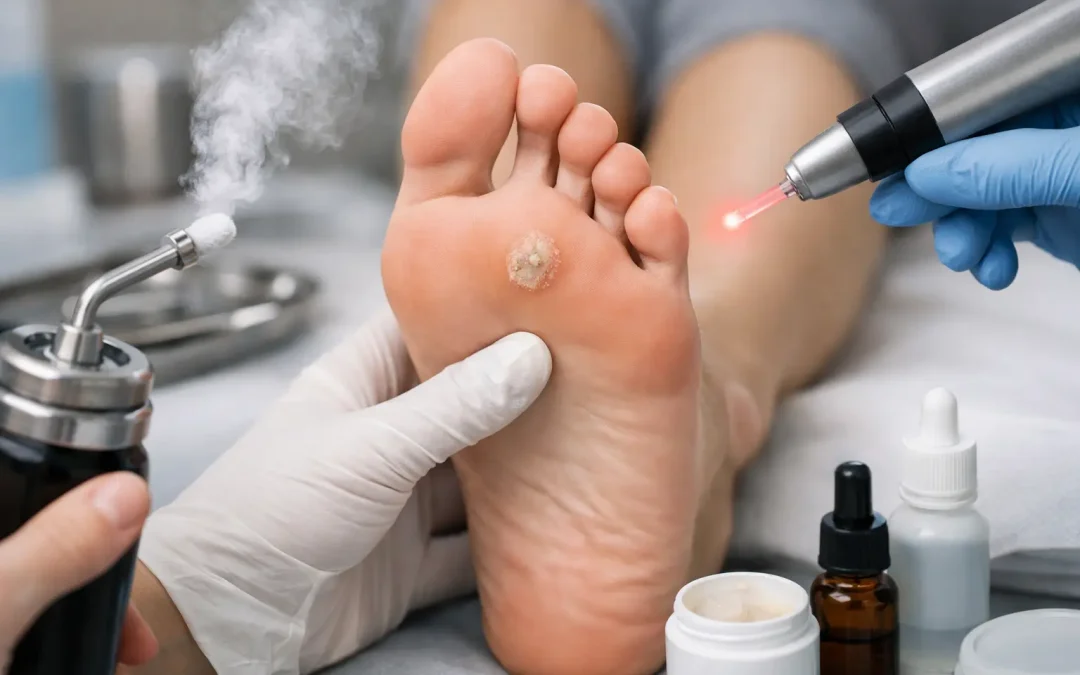
A verruca can be tiny yet make every step feel as though you are standing on a pin. When it has survived months of pharmacy treatments, changed how you walk or spread across the sole of your foot, it is time for a more considered plan. The best treatments for stubborn verrucae are not necessarily the harshest – they are the options that suit the location, depth, duration and behaviour of your particular lesion.
Verrucae are caused by strains of the human papillomavirus (HPV) entering the skin, often through tiny breaks. Many eventually resolve without treatment, but that does not make a painful, long-standing verruca easy to live with. A podiatry assessment can confirm what it is, reduce discomfort and help you choose an appropriate treatment path.
Why some verrucae are hard to shift
Verrucae on weight-bearing areas are repeatedly compressed as you walk. Rather than growing outwards, they can be pushed into the skin and covered by a layer of hard callus. This can make them especially tender and can also prevent topical treatments from reaching the infected skin as effectively.
They are also skilled at avoiding the body’s immune response. A lesion may look unchanged for weeks, then gradually become more active or develop small satellite verrucae nearby. Swimming-pool changing rooms, communal showers and barefoot activity can increase exposure, but persistent verrucae are not a sign that someone has poor hygiene.
Before choosing treatment, the diagnosis matters. Corns, callus, foreign-body reactions and some other skin lesions can resemble verrucae. A podiatrist will assess the skin pattern, tenderness, surface texture and the presence of tiny blood vessels that may appear as dark dots. This avoids months spent treating the wrong problem.
Best treatments for stubborn verrucae: what works and when
There is no single treatment that clears every verruca. Success depends on the individual immune response as well as the treatment used, and it can take several weeks or appointments. The right option balances likely benefit with comfort, healing time and your need to stay active.
Salicylic acid and regular skin reduction
Salicylic acid is often the sensible first-line option for uncomplicated verrucae. It softens and gradually removes infected hard skin, helping expose the lesion over time. It needs consistent use, usually daily, and can take weeks to make a meaningful difference.
For a stubborn verruca, professional reduction of the overlying hard skin can make this approach more effective and more comfortable. It also allows treatment to be directed accurately rather than irritating healthy skin around the lesion. Do not apply acid to broken skin, and seek clinical advice before self-treating if you have diabetes, poor circulation, neuropathy or a reduced ability to feel your feet.
Swift microwave therapy
Swift is an advanced microwave treatment designed specifically for verrucae. It delivers a precisely controlled dose of microwave energy into the lesion, generating localised heat within the affected tissue. Rather than relying on a chemical to break down the surface, the treatment is intended to prompt an immune response against the virus.
For people who have tried home treatments without success, or who want a technology-led approach without creating a wound, Swift can be an excellent option. Treatment is very quick, although there is a short, sharp sensation while the energy is delivered. Most people can return to normal daily activity straight afterwards, making it particularly appealing for busy adults, children and active patients.
A course of sessions is commonly recommended, with the exact number guided by the lesion’s response. Results vary, and no ethical clinician should promise clearance by a fixed date. Progress is assessed at each visit, alongside changes in tenderness, size and the normal skin lines returning through the area.
Needling and other minor procedures
Needling is another option for difficult verrucae, especially larger or persistent lesions. Performed under local anaesthetic, the verruca is repeatedly punctured with a fine needle. This introduces viral material into deeper tissue, with the aim of alerting the immune system to the infection.
It is a more involved treatment than Swift or topical acid and requires aftercare while the area heals. However, it may be appropriate where other methods have not worked or where there is a substantial, well-established lesion. Some clinics may also discuss other minor surgical or chemical options, but these should be chosen carefully because they can involve discomfort, healing time and, in some cases, scarring on a weight-bearing surface.
The part treatment alone cannot solve
Pressure is often the reason a verruca remains painful. If it sits under the ball of the foot, a prominent area of bone, tight footwear or a change in gait may be loading it with every step. Removing hard skin can provide immediate relief, but addressing that pressure can make recovery more manageable.
A podiatry assessment may include checking footwear, examining foot posture and watching how you walk. Offloading pads, simple footwear changes or insoles can reduce direct pressure while the skin heals. This is especially valuable for runners, people who are on their feet at work and anyone who has begun limping to avoid discomfort.
Avoid cutting a verruca yourself or trying to dig it out. Apart from causing bleeding or infection, this can make it harder to judge the true size of the lesion. Covering it in communal wet areas and avoiding sharing towels, socks, shoes or foot care equipment can reduce the chance of spreading the virus to others or to another part of your own foot.
When to book a podiatry appointment
Arrange an assessment if the lesion is painful, growing, bleeding, spreading or still present after a sustained course of appropriate home treatment. It is also wise to seek advice early if you have diabetes, impaired circulation, reduced sensation, immune suppression or a history of slow-healing wounds.
Children can develop verrucae too, and treatment decisions should take account of their age, comfort and how much the lesion is affecting school, sport and confidence. Sometimes careful monitoring is reasonable; sometimes discomfort or rapid spread makes active treatment the better choice.
At Eclipse Foot Clinic, an HCPC-registered podiatrist can examine the lesion, explain the available treatment choices clearly and create a plan around your feet and lifestyle. The goal is not simply to attack a patch of skin, but to help you walk, exercise and wear your usual shoes with confidence again.
A stubborn verruca rarely responds well to frustration or random remedies. Give it a clear diagnosis, a realistic treatment plan and enough time to respond – then keep the focus on comfortable, healthy feet.