
Shockwave Therapy for Achilles Tendinopathy
A stiff, painful Achilles first thing in the morning can turn a short walk downstairs into a reminder that something is not right. For runners, it may be the first few miles that hurt. For others, it is the walk to work, climbing stairs or pushing off to cross the road. Shockwave therapy for Achilles tendinopathy is one treatment option for persistent tendon pain, but it works best when it is part of a clear diagnosis and a properly planned recovery programme.
Achilles pain is rarely solved by simply resting until it settles. The tendon needs the right amount of loading, at the right stage, and the reason it became overloaded in the first place needs attention. That may involve footwear, training volume, calf strength, ankle movement, walking pattern or a combination of factors.
What is Achilles tendinopathy?
The Achilles tendon joins the calf muscles to the heel bone. It transfers force every time you walk, run, climb, jump or rise onto your toes. Tendinopathy describes a tendon that has become painful and less able to tolerate its usual load. It is not necessarily an acute tear or a condition driven by inflammation alone.
Pain is often felt either in the middle section of the tendon, a few centimetres above the heel, or where the tendon attaches to the back of the heel. These are known as mid-portion and insertional Achilles tendinopathy. The distinction matters. Insertional symptoms can be affected by heel shape, footwear pressure and compression of the tendon against the heel bone, so the rehabilitation plan may need adjusting.
Common signs include stiffness after rest, pain at the start of activity that may ease as you warm up, tenderness when the tendon is squeezed, and a gradual loss of confidence with walking or sport. Some people notice thickening in the tendon. A sudden snap, marked bruising, severe swelling or an inability to push off through the foot needs urgent assessment, as these symptoms can indicate a rupture rather than tendinopathy.
When shockwave therapy for Achilles tendinopathy may help
Shockwave therapy uses acoustic pressure waves delivered through the skin to the painful area. It is commonly considered for Achilles tendinopathy that has not improved sufficiently with an appropriate period of activity modification and progressive exercise rehabilitation.
The treatment is not a quick fix and it does not replace strengthening. Its purpose is to support the tendon’s recovery by stimulating a biological response in the tissue and helping reduce pain sensitivity. This can make it easier to progress the exercises that build the tendon’s capacity to cope with everyday life and sport.
Research and clinical experience suggest that shockwave can be particularly useful in long-standing cases, including when symptoms have continued for several months. Results vary, however. The location of the problem, how long it has been present, your health, your loading programme and the accuracy of the diagnosis all influence the outcome. Someone who continues to overload a painful tendon every day without changing anything else is less likely to get a good result.
At Eclipse Foot Clinic, treatment begins with understanding the whole picture rather than applying a machine to a sore spot. An orthopaedic assessment, examination of calf and ankle function, and gait analysis can identify relevant contributors. Diagnostic ultrasound may also be used where appropriate to examine tendon structure, detect thickening or identify changes around the attachment.
What happens during treatment?
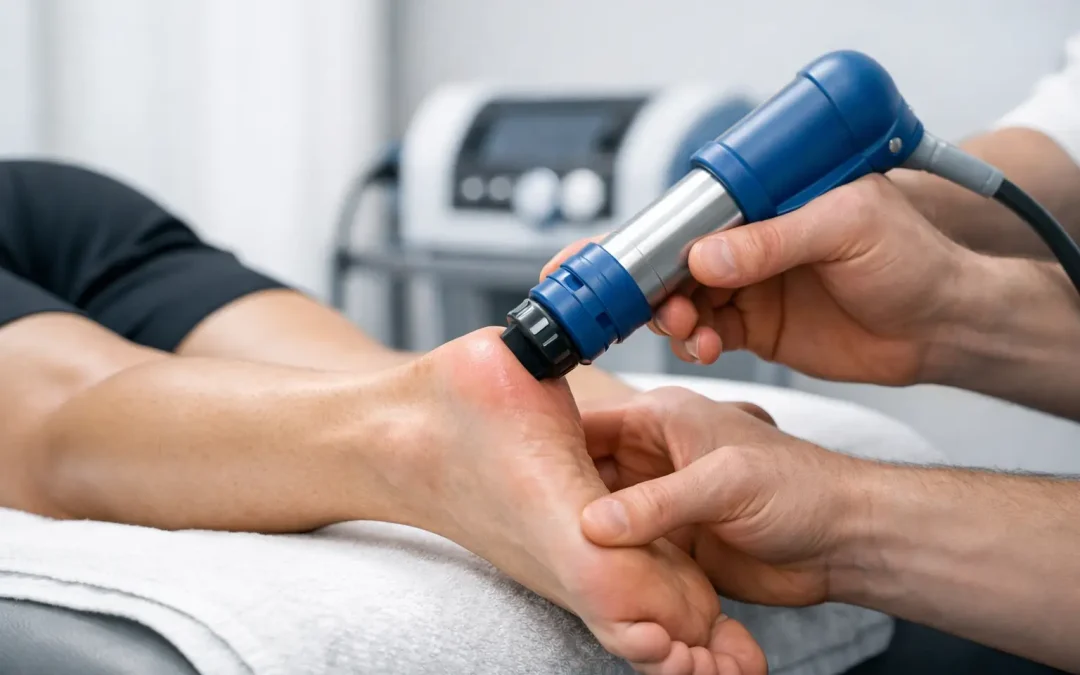
Following assessment and discussion of your treatment choices, a clinician applies gel to the skin and positions the shockwave handpiece over the relevant part of the tendon. The pressure waves are delivered in short pulses. Treatment normally takes only a few minutes.
You will feel tapping or pulsing, and it can be uncomfortable over a sensitive tendon. The intensity is adjusted to a level you can tolerate. Local anaesthetic is avoided because being able to feel the treatment helps the clinician set an appropriate level, and pain response may be part of the intended effect.
A course often involves several sessions spaced about a week apart, although the exact number and schedule depend on the presentation and the device used. It is common to experience temporary soreness for a day or two afterwards. This is usually manageable, but you should follow your clinician’s advice on pain relief and activity. Anti-inflammatory medication is not automatically the best choice for every tendon problem, so ask before using it around treatment.
The bigger change is gradual. Some patients notice less pain during the course itself, while others improve over the following weeks as their tendon rehabilitation progresses. A realistic expectation is essential: tendons adapt slowly, and recovery is measured in weeks to months rather than days.
The rehabilitation that makes treatment worthwhile
A painful Achilles still needs movement, but it needs sensible loading rather than complete rest or repeated flare-ups. Your plan may start by reducing the activities that sharply aggravate symptoms, such as hill running, speed work, jumping or long walks in unsupportive shoes. This does not always mean stopping all exercise. Cycling, swimming or adjusted gym training may allow you to maintain fitness while the tendon settles.
Progressive calf-strength work is usually central to treatment. The exercise selection, range and resistance should reflect whether the pain is mid-portion or insertional. For example, dropping the heel below step level may not suit an insertional tendon, where this position can increase compression at the back of the heel. This is why copying a generic exercise programme online can be frustrating or counterproductive.
Footwear can make a noticeable difference. A shoe that rubs directly on an irritated tendon attachment, has become unsupportive or suddenly changes your heel height may aggravate symptoms. In selected cases, a temporary heel lift, footwear advice or bespoke orthotics may help manage load while strength and movement are addressed. These are tools, not permanent substitutes for restoring calf and tendon capacity.
A return to running or court sports should be planned, not guessed. We look at pain during and after activity, morning stiffness the following day, calf endurance and the ability to perform controlled heel raises. Small, consistent increases are more useful than a good week followed by a painful setback.
Who may not be suitable for shockwave treatment?
Shockwave therapy is not appropriate for every cause of pain at the back of the ankle. Bursitis, a partial tear, an inflammatory condition, nerve-related pain or a stress injury may require a different approach. This is another reason assessment comes before treatment.
Your clinician will also check for factors that affect suitability, such as pregnancy, certain bleeding disorders or anticoagulant medication, a history of cancer in the treatment area, infection, reduced sensation, or recent steroid injection close to the tendon. If you have diabetes, circulatory concerns or a complex medical history, these should be considered carefully as part of your individual plan.
Steroid injections into the Achilles tendon are generally avoided because of the potential effect on tendon integrity. If inflammation around nearby structures is suspected, the clinician will explain the findings and the safest options rather than treating every painful heel in the same way.
Getting the diagnosis right saves time
Achilles pain can be stubborn, especially when you have already tried rest, stretching and changing trainers without success. But persistence does not mean you simply need to tolerate it. A detailed podiatry assessment can distinguish a tendon overload problem from other causes and give you a treatment route that makes sense for your work, walking demands and sporting goals.
Whether shockwave therapy is the right next step or not, the aim is the same: a calmer, stronger tendon that lets you move with confidence again. If your Achilles has been dictating your routine for too long, a focused assessment is a practical place to start.