
Are 3D Printed Insoles for Runners Worth It?
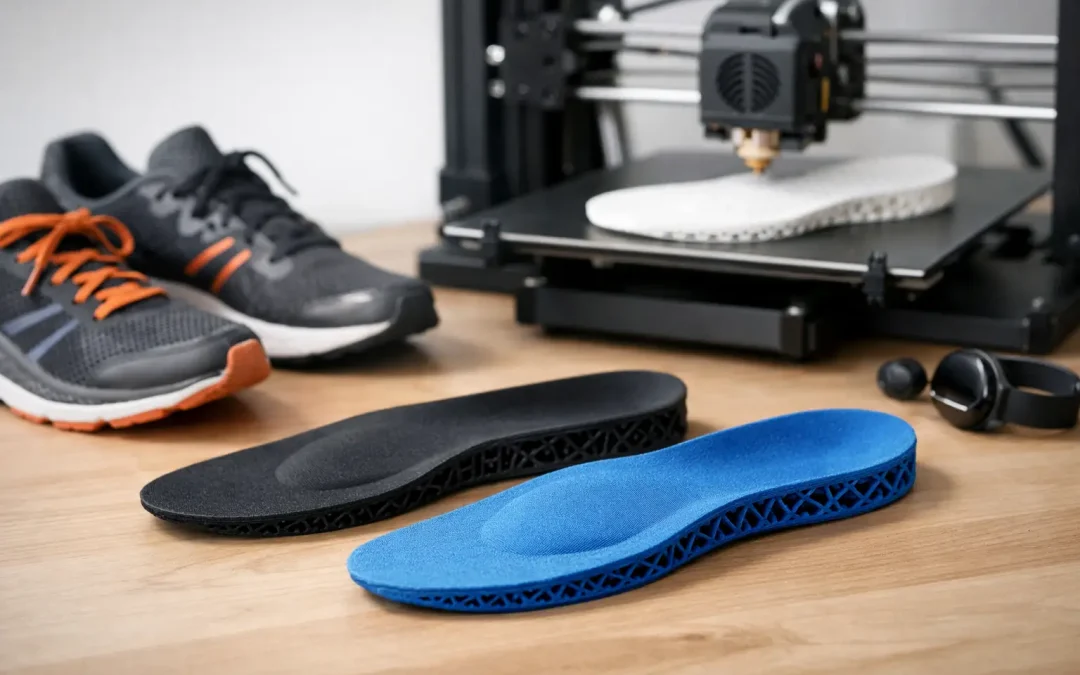
A niggle that appears at mile five, a heel that aches after faster sessions, or a knee that complains on hills can quickly change the way you run. 3D printed insoles for runners are designed to do more than make a shoe feel softer. When prescribed following a proper biomechanical assessment, they can help manage the loads travelling through your feet, ankles, knees and lower legs.
For runners, the key question is not whether an insole is fashionable or high-tech. It is whether it addresses the reason your symptoms keep returning, while allowing you to run comfortably and confidently.
What makes 3D printed insoles different?
Traditional orthoses are often made by taking a physical cast or impression of the foot, then shaping and adapting materials in a laboratory. This remains an appropriate option for many people. True 3D-printed insoles take a different route: a detailed digital model of the foot is combined with clinical findings from your assessment, then printed to a specification intended for your individual needs.
The result is not simply an off-the-shelf insole with a personalised name on it. The shape, contour, thickness and areas of support can be designed around your foot function, pressure patterns, footwear and running demands. Depending on the material and design, a 3D-printed device can be light, supportive and sufficiently durable for regular training.
That level of customisation matters because two runners with the same diagnosis may not need the same solution. One person with plantar heel pain may need help reducing strain through the plantar fascia. Another may need improved cushioning under the heel, a small adjustment to reduce pressure, or a change to how the foot moves during late stance. The diagnosis is the starting point, not the finished prescription.
When runners may benefit from custom insoles
Insoles are not a cure for every running injury, and they should not be used to run through severe pain. They can, however, be useful when foot mechanics or loading patterns are contributing to recurring symptoms.
Common reasons runners seek an assessment include plantar fasciitis or persistent heel pain, pain along the inside of the shin, forefoot pressure, Achilles tendon discomfort, recurrent ankle problems, knee pain and symptoms linked to flat feet or very high arches. Some runners also find that one side consistently becomes tired, tight or sore earlier than the other, particularly as weekly mileage increases.
A custom insole may be considered where footwear changes, sensible training adjustments and basic rehabilitation have not been enough. It can also be valuable after an injury, when returning to running and trying to restore confidence without overloading a sensitive area.
The aim is usually not to force the foot into a rigid “perfect” position. Feet need to move during running. Instead, the goal is to influence movement and pressure in a way that makes the task more manageable for your tissues. Small changes can make a meaningful difference when repeated over thousands of steps.
A scan alone does not create the right insole
It is easy to assume that a digital foot scan is all that is needed. A scan provides useful information about the shape of your feet, but it cannot explain why pain occurs at a certain point in your stride, why one leg is more affected, or how your body responds to fatigue.
A podiatry-led assessment should begin with your story. Your clinician will want to know where the pain is, when it started, what brings it on, your current and previous training, the surfaces you run on, recent changes in shoes or mileage, and any history of injury.
This is followed by an examination of the foot, ankle and lower limb. Joint movement, muscle strength, tendon tenderness, foot posture and leg alignment all provide important clues. If required, diagnostic ultrasound can help assess certain soft-tissue injuries, such as problems involving tendons or the plantar fascia.
Video gait analysis adds another valuable layer. Watching you walk and run can reveal how your foot, ankle, knee and hip behave under load. It is not about labelling a runner as an “over-pronator” or “under-pronator” (these are not appropriate terms) and automatically prescribing a device. It is about identifying patterns that may be relevant to your symptoms and testing whether support or changes in technique are likely to help.
At Eclipse Foot Clinic, this process is used to explain what is happening in plain English and discuss the available treatment choices with you. An insole may be part of the plan, alongside exercises, shockwave therapy, hands-on treatment, footwear advice or a carefully managed return-to-running programme.
How 3D printed insoles for runners are prescribed
Once an insole is considered appropriate, the prescription is based on clinical findings rather than a generic template. The design may include a contoured heel cup for stability, arch support to share load differently, cushioning in high-pressure areas, or modifications that accommodate a prominent joint or sensitive forefoot.
The material choice matters as much as the shape. A long-distance runner may prioritise comfort and low weight. A runner with instability may need more structure. Someone wearing close-fitting racing shoes will need a design that works within limited space, while a trail runner may need an insole suited to a more protective shoe. The right device has to fit the runner and the footwear.
Once manufactured, the insoles should be checked in the shoes you actually run in. Your clinician can assess the fit, make sure the heel sits securely and discuss a gradual wearing-in plan. It is normal to notice that your feet are working differently at first, but pain, numbness, rubbing or worsening symptoms are not things to ignore.
What 3D-printed insoles can and cannot do
A well-designed insole can improve comfort, reduce local pressure and help alter the forces that aggravate an injury. For many runners, that can mean a more reliable build-up of mileage, fewer symptoms after sessions and less anxiety about the next run.
They do have limits. Insoles cannot replace strength, recovery, sensible training progression or appropriate footwear. They will not correct every cause of hip, knee or back pain, and they cannot make a sudden jump in mileage risk-free. If your injury is driven mainly by inadequate calf capacity, poor recovery, bone stress or a significant tendon problem, the wider treatment plan is crucial.
There is also no universal “best” insole. A highly supportive design may be excellent for one runner and feel restrictive to another. The most appropriate option depends on your symptoms, examination findings, running goals and shoe choice. This is why a clinical review is more useful than buying an expensive device based on a pressure map alone.
Getting the best result from your insoles
Think of your insoles as one part of your running set-up, not a passive fix. Introduce them gradually, beginning with walking and shorter, easier runs before using them for speed work, hills or longer distances. If you have been injured, follow the return-to-running advice given by your clinician rather than testing the insoles on your biggest session of the week.
Keep an eye on how your symptoms respond over the following days, not just during the run itself. Reduced discomfort during exercise is encouraging, but lingering pain the next morning may indicate that the load is still too high. Your shoes should also have enough depth and volume to accommodate the insole without squeezing the foot or lifting the heel out of place.
A review appointment is particularly helpful if your running goals change, your footwear changes substantially, or symptoms move to a new area. Insoles can sometimes be adjusted, but they need to be reassessed in the context of what your body is telling you.
The best sign that a treatment plan is working is not that you constantly notice the insole. It is that running starts to feel less like a calculation of pain and more like the activity you enjoy again.