
Painful Corns Treatment: A Podiatrist Explains
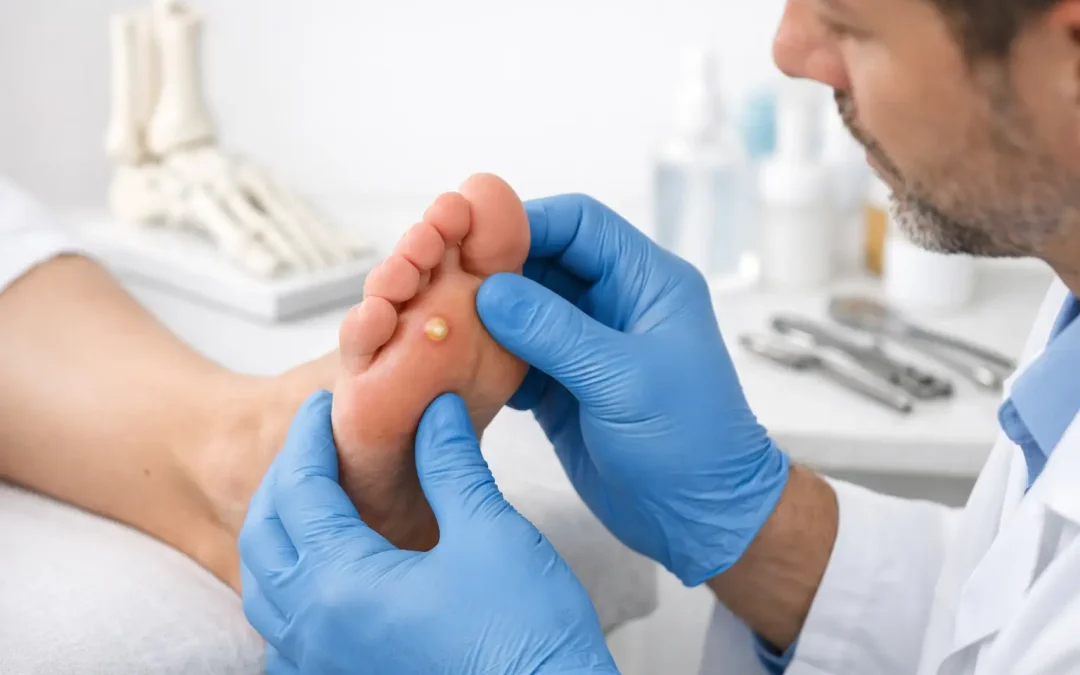
A corn can be no bigger than a lentil, yet make every step feel as though you are walking on a stone. Painful corns treatment from a podiatrist is about more than carefully removing hard skin. It is about finding out why that small area of skin is under excessive pressure, relieving the pain safely and giving you a practical plan to stop it returning.
Corns are common, particularly when footwear, foot shape, activity levels or changes in mobility create repeated rubbing or compression. They can affect anyone, from active walkers and runners to people who spend long hours on their feet at work. The good news is that effective treatment is usually straightforward when the diagnosis is right.
What is a corn, and why does it hurt?
A corn is a localised build-up of hard skin caused by repeated pressure or friction. Unlike a more diffuse callus, a corn often has a concentrated central core that presses into the deeper layers of skin. This is why it can produce a sharp, pinpoint pain when you stand, walk or wear shoes.
Hard corns commonly develop over toe joints, on the ball of the foot or on the outside of the little toe. Softer corns can form between the toes, where moisture keeps the skin pale and pliable but does not remove the pressure. Seed corns are smaller and may appear in clusters, often on the sole or heel.
A painful area is not always a corn. A verruca, foreign body, small ulcer, pressure lesion or skin condition can look similar at first glance. That distinction matters because the wrong self-treatment may delay recovery or damage otherwise healthy skin.
When painful corns treatment needs a podiatrist
Many people try to manage corns with a pumice stone, corn plasters or a change of shoes. A gentle foot file may reduce superficial hard skin for some people, but it will not address a deep corn or the cause of the pressure. Over-the-counter medicated corn products can contain acids that damage skin, particularly if they spread beyond the corn.
A podiatry assessment is sensible when pain is affecting your walking, favourite footwear, sport or work. It is also the safest option if the corn keeps returning, is bleeding, looks inflamed or you are unsure whether it is a corn at all.
Do not attempt to cut a corn out yourself with blades, scissors or other sharp tools. The risks include a wound, infection and more discomfort. This is especially significant for people with diabetes, poor circulation, reduced sensation, immune-system conditions or a history of foot wounds. In these cases, seek professional advice promptly rather than using medicated treatments at home.
What happens at a podiatry appointment?
A good appointment starts with the problem you are experiencing, not simply the visible hard skin. Your podiatrist will ask when the pain started, whether particular shoes trigger it, how active you are and whether you have had previous foot problems. They will examine the corn and surrounding skin, assess the position of your toes and joints, and look for signs that pressure is being concentrated in one place.
In many cases, the corn can be reduced or removed during the appointment using sterile, specialist instruments. This is a precise treatment, designed to remove the hardened skin and central core while protecting the healthy skin around it. Most patients feel an immediate reduction in pressure and are able to walk more comfortably afterwards.
If the cause is less obvious, assessment may include checking joint movement, the way your foot loads when standing and how you walk. Footwear is part of the clinical picture too. A shoe may be the correct size but still press on a prominent toe joint, have a narrow toe box, or allow the foot to slide forwards with every step.
At Eclipse Foot Clinic, assessment is focused on explaining what is causing the pressure as clearly as possible, then giving you informed choices about the most suitable treatment and prevention plan.
Treating the cause, not only the corn
Removing a corn relieves pain, but corns will return if the pressure pattern remains unchanged. The right prevention plan depends on where the corn is, your foot shape, the demands you place on your feet and the shoes you need to wear. There is rarely one universal solution.
For a corn on top of a toe, a roomier toe box, different shoe fastening or a soft toe prop may reduce rubbing. For a corn under the ball of the foot, cushioning, pressure-relieving padding or an insole adjustment can make a real difference. If a toe is curled or prominent, a silicone device may protect the area in certain shoes, although it must fit comfortably and not create pressure elsewhere.
When repeated loading is the driver, orthotic therapy may be worth considering. Bespoke orthotics or 3D-printed insoles can redistribute pressure and support foot function, particularly for people with recurrent painful corns, longstanding foot deformity or a demanding walking, running or work routine. They are not necessary for every corn, but they can be highly useful where footwear changes alone are not enough.
Footwear: small changes with a big effect
The shoe that looks fine while sitting down can be very different after an hour of walking. Feet often spread and swell through the day, so try footwear later in the afternoon where possible. There should be enough length in front of the longest toe, but width and depth are just as important.
Avoid shoes that squeeze the toes together or press directly over a corn. High heels shift more force onto the forefoot, which can aggravate corns under the ball of the foot. That does not mean every patient must abandon a preferred style of shoe forever, but it may mean limiting how long it is worn, choosing a lower heel, or using padding and insoles selectively.
For runners and active adults, consider whether a recent change in training volume, footwear model or terrain coincided with the problem. Increased mileage can reveal a pressure point that was previously manageable. A podiatrist can help separate a footwear issue from a biomechanical one, so you are not left replacing shoes repeatedly without resolving the cause.
Why corn plasters can make matters worse
Corn plasters can be tempting because they promise a quick fix. Some contain salicylic acid, which softens and breaks down thickened skin. The difficulty is that acid does not reliably stop at the corn. If the plaster moves or is used on thin, damp or broken skin, it can cause soreness, a chemical burn or an open area.
They should generally be avoided by anyone with diabetes, poor circulation, neuropathy or fragile skin. They are also unsuitable if you do not have confidence that the lesion is definitely a corn. Professional removal is controlled, targeted and allows the skin to be checked properly at the same time.
Signs you should not ignore
Book an assessment sooner rather than later if you notice persistent pain, redness, warmth, swelling, discharge, bleeding or a change in skin colour. A lesion that is very painful when squeezed from the sides may be a verruca rather than a corn. If you have diabetes and develop any new area of pressure, broken skin or unexplained foot pain, arrange a diabetic foot assessment without delay.
It is also worth seeking help when the problem changes your behaviour. Limping to avoid a corn can place extra strain on the knees, hips and lower back, while avoiding walks and exercise can gradually affect fitness and confidence. A small foot problem deserves attention when it starts limiting the life you enjoy.
Keeping feet comfortable between appointments
Once a corn has been treated, moisturise dry skin regularly but avoid applying cream between the toes, where excess moisture can soften the skin too much. Wear clean, well-fitting socks and check your feet routinely, especially if you cannot easily see the soles. If hard skin builds up again, do not wait until it becomes severely painful before arranging treatment.
The most effective painful corns treatment is often a combination of skilled removal, pressure relief and a realistic footwear plan. When every step is easier, it becomes much simpler to get back to walking the dog, training, working comfortably and wearing shoes without planning your day around pain.