
Can Orthotics Help Knee Pain? What to Know
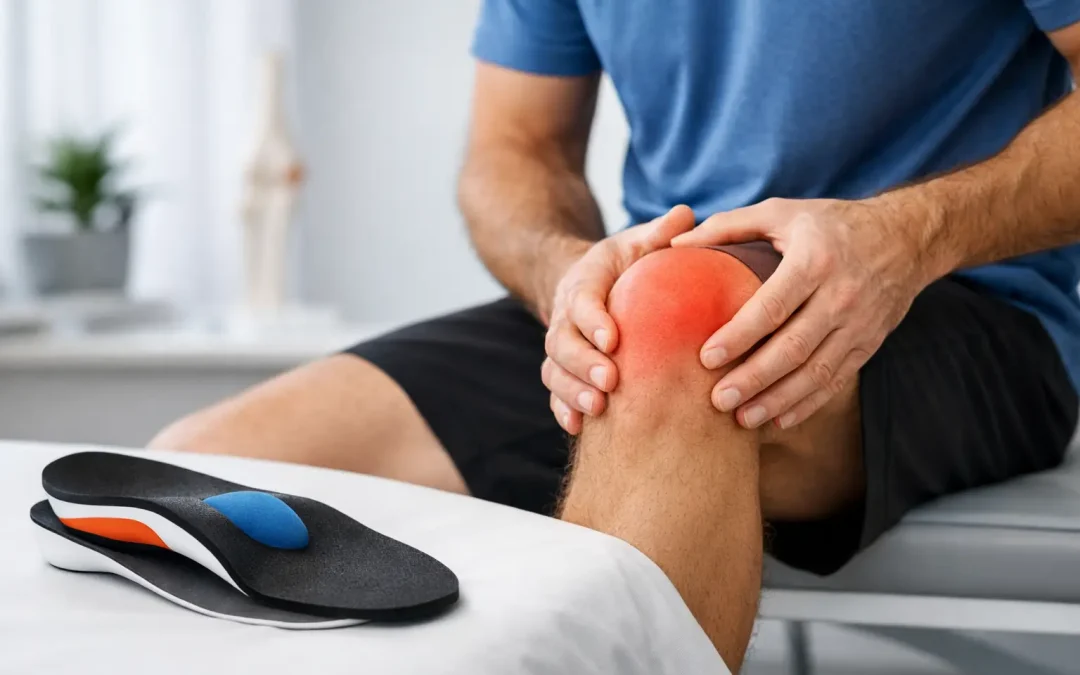
A sore knee can make a short dog walk, a run around the park or getting downstairs in the morning feel far harder than it should. The painful area may be at the knee, but the cause is not always there. So, can orthotics help knee pain? For some people, they can make a meaningful difference by improving how forces travel from the foot through the ankle and leg. They are not a cure-all, however, and the right answer depends on why your knee hurts in the first place.
Can orthotics help knee pain?
Orthotics are insoles designed to support, cushion or guide the way your feet work inside your shoes. If your feet roll in excessively, your arches collapse under load, or one part of the foot takes more pressure than it should, the lower leg may rotate differently with every step. Over thousands of steps, that altered movement can increase strain around the knee.
A well-chosen orthotic may reduce this strain by supporting the foot more effectively, redistributing pressure and improving lower-limb alignment while you walk, work or exercise. This can be particularly helpful where knee symptoms are linked with pronation, flat feet, high arches, leg-length differences, poor footwear support or changes in training load.
The key word is ‘may’. Knee pain has many possible causes, including patellofemoral pain, tendon problems, osteoarthritis, meniscal injury, ligament damage and pain referred from the hip or lower back. Insoles will not repair a torn ligament or resolve every type of arthritis. They work best as one part of a clear, diagnosis-led plan.
How foot mechanics can affect the knee
Your feet are the foundation of your movement. When they meet the ground, they absorb impact and influence the position of the ankle, shin and knee above. A foot that rolls inwards too far or too quickly can encourage inward rotation of the lower leg. In some people, this contributes to pain around or behind the kneecap, particularly during running, squatting, climbing stairs or standing after sitting.
At the other end of the spectrum, a very rigid, high-arched foot may absorb shock less effectively. This can increase loading through the leg, especially during high-impact sport. Reduced big-toe movement, an old ankle injury or an uneven walking pattern can also change how you load the knee.
This does not mean that every flat foot causes knee pain, or that every painful knee needs an insole. Many people have pronounced foot posture without symptoms. What matters is the combination of your foot function, your symptoms, your activity, footwear, strength and medical history.
When insoles are most likely to be useful
Orthotics are often considered when knee pain is worse with walking, running or prolonged standing and there are signs that foot mechanics are contributing. Runners who develop pain after increasing mileage, people whose knees ache during long shifts, and active adults returning to exercise after a break are common examples.
They can also be useful alongside a rehabilitation programme for patellofemoral pain, sometimes called runner’s knee. In this situation, an orthotic may help reduce aggravating forces enough to make strengthening work more comfortable and achievable. Improving hip, thigh and calf strength is often just as important as changing what happens at the foot.
For osteoarthritis, cushioning and support may improve comfort for some patients, especially where altered foot loading is adding to symptoms. The benefit can vary considerably. An insole should feel like it helps you move more comfortably, not like a rigid device you have to tolerate because you have been told it is good for you.
Off-the-shelf or custom orthotics?
An off-the-shelf insole can be a sensible starting point for mild symptoms or for footwear that simply lacks cushioning and arch support. It is quick, affordable and may be enough where there is no complex biomechanical issue. The downside is that it has not been selected or adjusted for your individual foot shape, walking pattern or knee problem.
Custom orthotics are made from a detailed assessment and designed around your needs. They may include carefully placed arch support, heel control, cushioning, wedges or pressure-relieving features. This is useful if you have persistent symptoms, a marked asymmetry, a previous injury, a significant foot deformity or specific sporting demands.
Custom does not automatically mean better. The best device is the one that suits your diagnosis, fits your chosen shoes and supports your return to normal activity. A bulky orthotic that will not fit in your work shoes or trainers is unlikely to be worn consistently, however precisely it has been made.
What a podiatry assessment should look at
A proper assessment is more than looking at your feet while you are sitting down. At Eclipse Foot Clinic, a biomechanics appointment can include a discussion of where and when the pain occurs, your medical history, work demands, sports, footwear and previous injuries. The aim is to understand the whole movement picture, not simply sell an insole.
Your podiatrist may assess joint range of motion, muscle strength, foot posture, leg alignment and areas of tenderness. Watching you walk, and where appropriate run, can reveal movement patterns that are not obvious on the treatment couch. Video gait analysis helps assess how your feet, ankles and knees behave dynamically, while diagnostic ultrasound may be used where a soft-tissue injury is suspected.
From there, you should receive a clear explanation of the findings and realistic options. That may include footwear changes, targeted exercises, activity modification, physiotherapy input or an orthotic. For some patients, a bespoke orthotic or true 3D-printed insole is appropriate. For others, the right recommendation may be a simpler prefabricated device, or no orthotic at all.
Getting the most from orthotics for knee pain
Orthotics should usually be introduced gradually. Start by wearing them for short periods and build up over several days, particularly if they change the way your foot is supported. Mild awareness of the device can be normal at first. Increasing knee, foot, arch or back pain is not something to push through without advice.
Footwear matters as much as the insole. A supportive trainer or walking shoe with enough depth is generally easier to pair with an orthotic than a narrow, flexible shoe. If you need the device for running, it should be assessed in the trainers you actually use, not only in everyday shoes.
It is also worth looking at training load. A new pair of orthotics cannot compensate for doubling your running distance, returning to hill work too quickly or spending all day on hard floors in unsuitable shoes. Small adjustments to activity, combined with the right strengthening programme, often produce the most reliable progress.
When knee pain needs medical attention first
Do not assume your symptoms are purely biomechanical if the knee is swollen, hot, red, locked, gives way or cannot take weight after an injury. Seek urgent medical advice for severe pain following trauma, a visibly deformed joint, fever with a swollen knee, or calf swelling and breathlessness.
Persistent pain also deserves a professional assessment, particularly if it disrupts sleep, is getting worse, or has not improved after reducing aggravating activity. A podiatrist can identify whether foot mechanics are likely to be part of the picture and, when needed, advise on referral to a GP, physiotherapist or orthopaedic specialist.
The goal is not to make you dependent on an insole. It is to reduce avoidable strain, support comfortable movement and help you return to the walks, work, sport and everyday activities you enjoy with greater confidence.