
When to See a Callus Removal Podiatrist
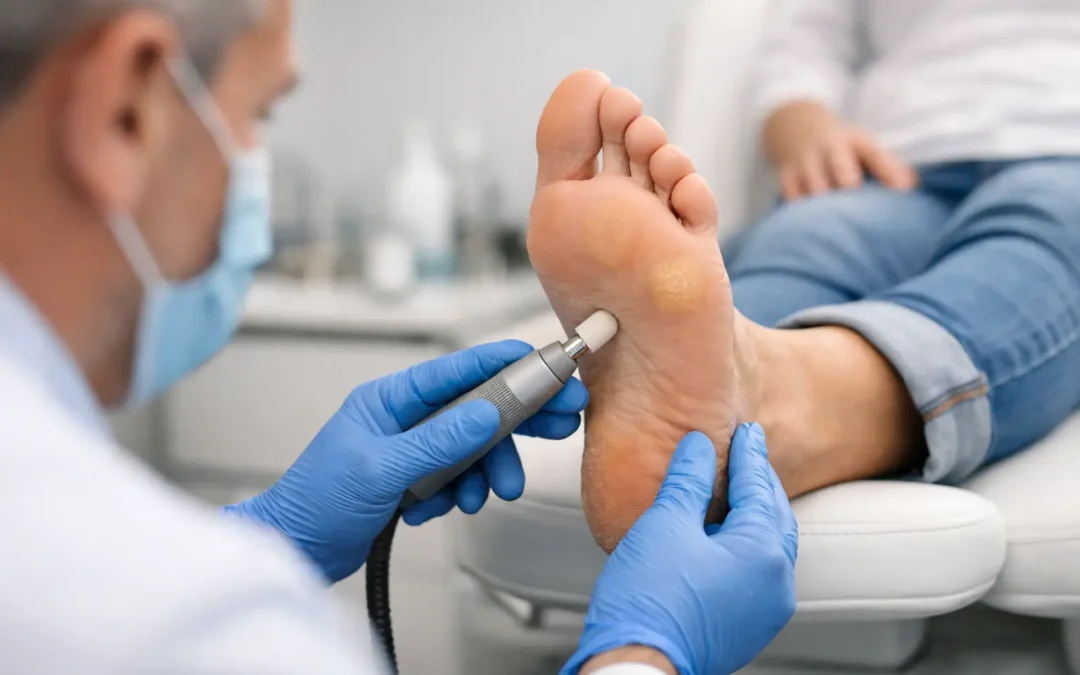
Hard skin on the ball of your foot can seem like a small nuisance until every step feels as though you are standing on a pebble. A callus removal podiatrist does more than reduce the visible build-up: they identify why that area is under pressure, remove it safely and help you stop the problem repeatedly returning.
Calluses are extremely common, particularly if you spend long hours on your feet, enjoy running or walking, wear work shoes, or have changes in foot shape and movement. They are often manageable, but painful, recurring or changing hard skin deserves a proper assessment rather than another round with a foot file.
What is a callus and why does it form?
A callus is an area of thickened, hardened skin. It is the body’s response to repeated friction or pressure, usually on the sole, heel, side of the big toe or beneath the forefoot. The skin is trying to protect itself, but excessive build-up can become uncomfortable and make footwear difficult to tolerate.
Pressure is not always caused by a single pair of tight shoes. It may be linked to the way your foot loads the ground when you walk or run, a prominent bone, toe deformity, reduced cushioning under the foot, previous injury, or a change in activity. For some people, a callus appears after starting a new exercise routine. For others, it gradually becomes more troublesome as mobility, footwear needs or foot shape change over time.
A callus is usually broader and flatter than a corn. Corns are often more localised, with a firm central core that can create sharp pain under direct pressure. Both can be treated, but the reason they develop needs to be considered if you want longer-lasting comfort.
What happens at a callus removal podiatrist appointment?
A professional appointment begins with listening to what is bothering you. Your podiatrist will ask where the pain occurs, when it began, what shoes you wear most often and whether it affects walking, exercise or work. They will also check for health factors that can influence foot care, including diabetes, circulation concerns, reduced sensation and medication.
The foot is then examined carefully. This may include assessing the skin, joints, toe position, footwear and areas of pressure. If a callus keeps returning in the same place, looking at your walking pattern can be particularly useful. At Eclipse Foot Clinic, assessment may include biomechanics examination, video gait analysis or diagnostic ultrasound where symptoms suggest there is a deeper soft-tissue or joint issue contributing to the pressure.
The callus can usually be reduced during the appointment using sterile, specialist instruments. This is a precise process that removes the excess hard skin while protecting healthy tissue underneath. Many people notice an immediate improvement in comfort, especially when a thick callus has been pressing into the sole of the foot.
Treatment should not be painful. You may feel gentle pressure or a light scraping sensation, but a skilled podiatrist works gradually and checks your comfort throughout. If there is a corn within the hard skin, this can also be carefully removed.
Why home callus removal can cause problems
Foot files and moisturisers can have a place in routine maintenance for people with healthy feet, provided they are used gently. However, aggressively filing hard skin can leave the area sore and may encourage you to remove more than is sensible. Blades, corn plasters and strong acid preparations carry greater risks, especially if you are unsure whether the lesion is a callus, corn, verruca or something else.
Over-the-counter acid treatments are not suitable for everyone. They can damage surrounding skin and are particularly inappropriate without clinical advice for people with diabetes, poor circulation, nerve damage or fragile skin. Never attempt to cut a callus yourself.
There is also a practical limitation to self-treatment: it addresses the thickened skin, not necessarily the force causing it. If the underlying pressure remains unchanged, the callus may return quickly.
Preventing hard skin from coming back
A callus does not always need an elaborate solution. Sometimes a change in shoe fit, a cushioning insole or a targeted pad is enough to reduce pressure. Other cases need a more individual approach, particularly where pain is persistent or linked to foot mechanics.
Your podiatrist may recommend a moisturising routine using an appropriate urea-based foot cream to keep skin supple between appointments. Footwear advice can also make a meaningful difference. Shoes need adequate width and depth, a supportive sole and enough room around areas that rub. A shoe that looks comfortable can still place significant pressure on the forefoot if it is too narrow or has a thin, unforgiving sole.
When calluses are caused by the way you walk, run or stand, temporary padding may provide relief while the cause is investigated. Prescription orthoses or bespoke insoles can redistribute load away from a painful pressure point. True 3D-printed insoles can be useful where a highly accurate fit and specific pressure management are needed, although they are not automatically the right answer for every patient. The best option depends on your symptoms, activity level, footwear and the findings of your assessment.
If a painful callus sits beneath the ball of the foot, for example, it may be related to overload through one metatarsal head. In that situation, simply removing the callus may help immediately, but offloading that area is what can make walking and exercise more comfortable over the longer term.
When calluses need prompt professional attention
Book an assessment if hard skin is painful, bleeding, cracked, inflamed, rapidly changing or repeatedly returning despite sensible foot care. It is also worth seeking advice if you are changing the way you walk to avoid pain, as this can place strain on other parts of the foot, ankle, knee or lower leg.
People with diabetes should treat new hard skin, corns, cracks, blisters and colour changes seriously. Diabetes can affect circulation and sensation, meaning a seemingly minor skin problem may be less noticeable or slower to heal. Regular diabetic foot assessments and early podiatry advice offer a safer way to manage pressure areas.
Do not assume that every rough patch is a callus. Verrucae can develop beneath a callused surface and may be painful when squeezed from the sides. Some skin lesions need a different treatment plan, so an accurate diagnosis matters before applying products at home.
How often should calluses be removed?
The right interval varies. A one-off callus caused by unsuitable holiday footwear may settle once the source of rubbing is removed. If you have a structural pressure point, reduced mobility or a condition that causes hard skin to build up quickly, regular podiatry appointments may be the most comfortable and practical option.
Your podiatrist can recommend a schedule based on how rapidly the skin returns and how much it affects daily life. The aim is not to over-treat your feet, but to maintain healthy skin, reduce discomfort and avoid the cycle of letting a small pressure point become painful again.
Comfortable feet start with the cause
Hard skin is easy to dismiss, yet it can quietly limit dog walks, gym sessions, workdays and the shoes you feel able to wear. Safe removal offers welcome relief, but understanding the pressure behind a callus gives you the best chance of staying comfortable. If every step is reminding you that something is wrong, it is a good time to have your feet properly assessed.