
Daily Diabetic Foot Checks That Protect Your Feet
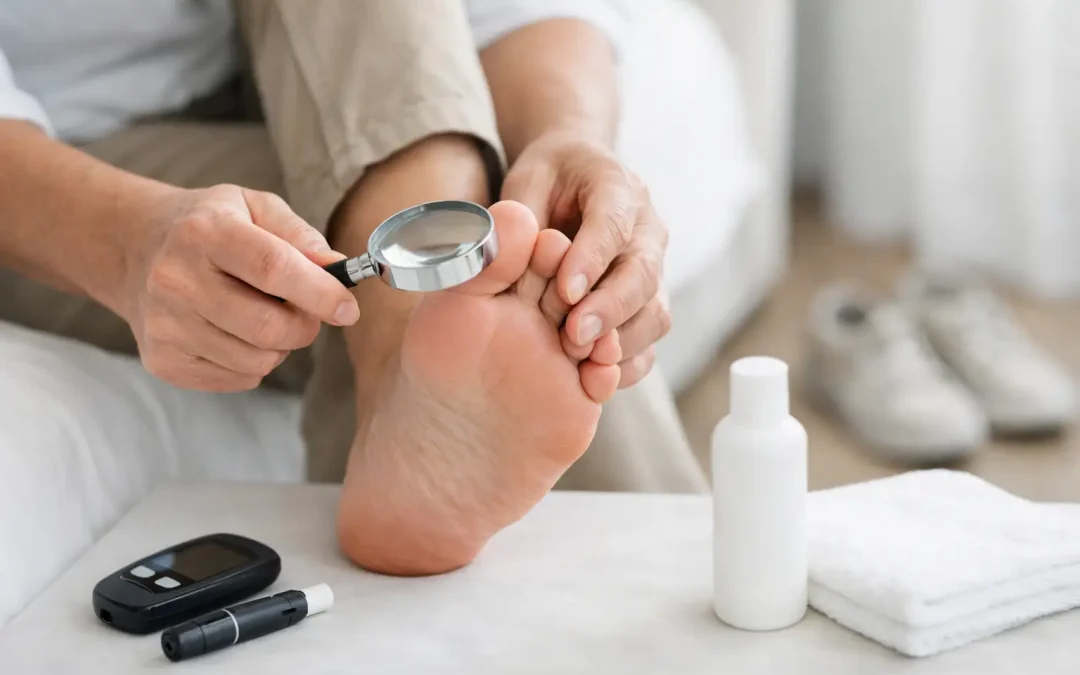
A blister from a new shoe, a tiny crack in the heel or a nail edge rubbing against the next toe may feel minor. For someone living with diabetes, these small changes can develop quickly if sensation or circulation is reduced. Regular diabetic foot checks help you spot a problem early, when it is usually simpler to treat and far less likely to interrupt walking, work or the activities you enjoy.
Diabetes can affect the nerves and blood supply in the feet over time. You may not feel pain, heat, pressure or a small injury in the usual way, while reduced circulation can slow healing. That is why a quick daily check is a practical part of looking after your diabetes, alongside blood glucose management and routine clinical reviews.
Why diabetic foot checks matter
Diabetic foot problems do not always begin with obvious pain. Loss of protective sensation, often called peripheral neuropathy, can mean a stone in a shoe, a developing corn or a cut goes unnoticed. Changes to circulation can make skin more vulnerable and make it harder for the body to repair damage.
Not everybody with diabetes has the same level of risk. Your risk may be higher if you have previously had a foot ulcer, have reduced sensation or pulses, smoke, have kidney disease, struggle to see or reach your feet, or have foot deformity. However, a daily check is worthwhile even if you have never had a foot problem. It builds familiarity with what is normal for your feet, so a change stands out sooner.
This is not about examining your feet anxiously for ten minutes each day. It is a calm, consistent habit that takes a minute or two, ideally after washing or before putting on socks.
How to carry out daily diabetic foot checks
Choose a well-lit spot and look at both feet from every angle: the tops, soles, heels, sides, between the toes and around each nail. If bending is difficult, use a hand mirror, ask a family member to help or arrange regular support from a podiatrist.
Look for changes in skin colour, new swelling, broken skin, blisters, cracks, cuts, bleeding, callus, corns, rashes or areas that look shiny. Pay attention to redness, especially where footwear may rub. Check whether one foot feels noticeably warmer than the other by using the back of your hand. Do not use hot water bottles, heating pads or a bare foot to test bath water, as reduced sensation can make burns more likely.
Check your toes closely. Damp, pale or sore skin between them can suggest a fungal infection, while a thickened or sharp nail can create pressure on neighbouring skin. Notice whether nails are becoming ingrown, discoloured, crumbly or difficult to cut safely.
Your shoes deserve the same attention. Before putting them on, run your hand inside to check for stones, rough seams, loose insoles or anything that could press against the foot. Wear clean, well-fitting socks without tight elastic and choose footwear with enough depth and width for your toes. A shoe that feels fine in the shop can still rub after several hours of walking, particularly if your feet swell during the day.
Care that keeps skin protected
Wash and dry your feet daily, including carefully between the toes. Apply moisturiser to dry skin on the tops and soles, but not between the toes, where excess moisture can soften the skin and encourage infection.
Avoid cutting corns or callus yourself, using corn plasters, or applying over-the-counter acid treatments without professional advice. These products can damage healthy skin as well as hard skin, particularly when sensation or circulation is affected. Equally, do not attempt to cut deeply into an ingrown nail. A small self-treatment injury can become a much bigger issue.
If you cannot safely manage nails, hard skin or recurring pressure areas, regular podiatry care is a sensible preventative measure. The aim is not simply to make feet look tidier. It is to reduce pressure, protect skin and identify changes before they become painful or infected.
Changes that need prompt advice
Contact your GP, diabetes team or podiatrist promptly if you notice a break in the skin, a blister, a cut that is not healing, new redness, swelling, discharge, a bad smell or increasing pain. Do not wait to see whether it improves over the next week.
Some symptoms require urgent same-day medical advice. These include a foot that is red, hot and swollen, especially if it has changed shape; spreading redness; pus; fever or feeling unwell; blue, black or very pale skin; or a new wound with signs of infection. A hot, swollen foot can sometimes be a sign of Charcot foot, a serious condition involving weakening of the bones and joints. Keep weight off the foot where possible and seek urgent assessment.
Pain is still meaningful, but no pain is not always reassuring in diabetes. A painless wound needs the same respect as a painful one. Taking a photograph when you first notice a change can also help you monitor whether it is worsening, although it should never delay seeking advice.
What happens in a professional diabetic foot assessment
A clinical diabetic foot assessment provides a clearer picture of your individual risk than a visual check alone. A podiatrist will ask about your diabetes, previous foot problems, symptoms, footwear and activity levels, then examine the skin, nails, foot shape and areas of pressure.
They may assess circulation by checking pulses and skin temperature, and assess sensation using simple instruments designed to identify reduced protective feeling. Your footwear can be reviewed for fit, wear patterns and pressure points. Where appropriate, gait assessment can show how forces are moving through the foot and lower limb when you walk.
The outcome should be clear and practical. You may be advised that routine self-care and annual review are appropriate, or that you would benefit from more frequent monitoring, professional nail and skin care, footwear changes, pressure relief or custom orthotic support. It depends on your circulation, sensation, foot shape, skin condition and history, not simply on how long you have had diabetes.
At Eclipse Foot Clinic, assessments are carried out by HCPC-registered podiatrists who take time to explain findings in plain English. If a persistent pressure area, pain or wound concern needs closer investigation, the right plan may include diagnostic assessment, offloading advice and coordinated referral to your wider diabetes or medical team where needed.
Make the check easy to keep up
The best routine is the one you will actually do. Keep a mirror where you dry your feet, leave moisturiser beside it and make checking your shoes part of getting dressed. If your eyesight, mobility or memory makes this difficult, involve someone you trust rather than trying to manage alone.
Continue to attend your NHS diabetes reviews and make sure you know your current foot-risk status. A private podiatry appointment can complement that care when you need help with ongoing nail care, hard skin, footwear pressure, changing sensation or a concern that does not feel right.
Your feet carry you through every ordinary and active part of life. A brief daily look gives you the chance to act on a small change before it has the opportunity to slow you down.