
Podiatrist Versus Chiropodist Differences
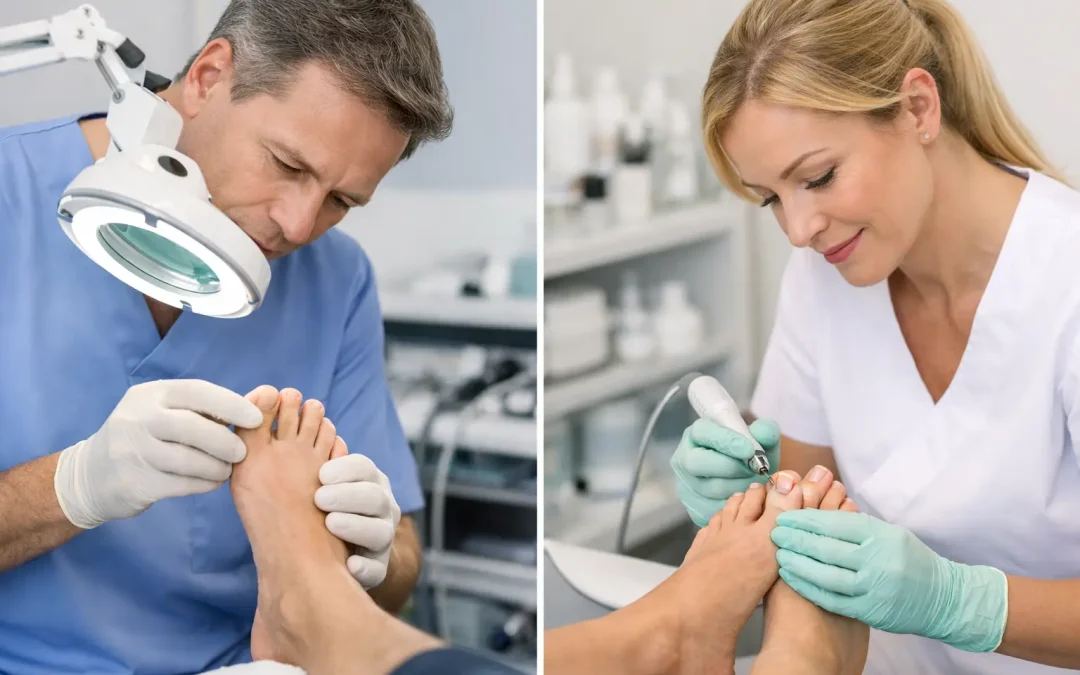
A painful heel when you first step out of bed, a nail that has become difficult to cut, or a child who seems uncomfortable when running can all prompt the same question: who should you see? The podiatrist versus chiropodist differences are much smaller than many people expect. In the UK, the two titles usually describe the same regulated foot-health profession, but knowing what to check can help you choose the right care for your symptoms.
Podiatrist versus chiropodist differences: the short answer
For most patients, a podiatrist and a chiropodist are the same type of clinician. Both titles are protected in the UK and may be used by professionals registered with the Health and Care Professions Council (HCPC). You may see one clinic use “chiropody” for regular nail and skin care and another use “podiatry” for the same service.
Chiropody is the older, more familiar term for many patients, particularly those who have attended regular foot-care appointments for years. Podiatry is the modern term used more widely across healthcare, education and specialist practice. The change in language reflects how broad the profession has become, not a divide between two separate qualifications.
An HCPC-registered podiatrist or chiropodist is trained to assess, diagnose and manage a wide range of conditions affecting the feet, ankles and lower legs. Their work can include routine care, prevention, pain management, biomechanical assessment and treatment for more complex problems. The exact services a clinician provides will depend on their additional training, experience, equipment and professional scope of practice.
The title matters less than the clinician’s expertise
If you are booking help for hard skin, corns or difficult nails, either term may lead you to the right appointment. If pain is stopping you from walking, exercising or wearing your usual footwear, look beyond the title and ask what assessment and treatments the clinic offers.
A clinician with a specialist interest in sports injuries, for example, may assess joint movement, muscle strength, footwear, training load and how you walk or run. Video gait analysis, orthopaedic examination and, where appropriate, diagnostic ultrasound can reveal clues that are not apparent from looking at the painful area alone. A heel that hurts may be linked to plantar fasciitis, but it could also involve tendon irritation, joint restriction, a nerve-related problem or changes in how the foot is loading.
Likewise, an ingrown toenail is not always simply a nail-cutting issue. The shape of the nail, recurring infection, footwear pressure and the condition of the surrounding skin all affect the best treatment choice. Some cases respond well to conservative care, while persistent or severe cases may need a minor surgical procedure carried out by an appropriately trained podiatrist.
The useful question is not simply, “Do I need a podiatrist or a chiropodist?” It is, “Is this clinician HCPC registered and experienced in treating my particular problem?”
What both podiatrists and chiropodists can help with
A regulated Podiatrist can support patients across the lifespan, from children with walking concerns to older adults who need help to stay comfortable and mobile. Common reasons to arrange an appointment include painful corns and callus, thickened or fungal nails, cracked heels, verrucae, athlete’s foot, ingrown toenails and recurring foot pain.
They also play an important preventative role. For someone with diabetes, regular foot-health assessment can identify changes in circulation, sensation, skin condition and pressure areas before they become more serious. This is particularly valuable if it has become harder to see or care for your own feet safely.
For active adults, podiatry can be central to keeping training enjoyable rather than frustrating. Pain in the heel, arch, forefoot, ankle, shin, knee or lower leg may be influenced by biomechanics, footwear, recovery and changes in activity. The right plan might involve hands-on treatment, exercises, footwear advice, load management or prescription orthoses. It depends on the diagnosis, your goals and what your body needs to recover.
Where specialist podiatry makes a difference
Routine foot care and specialist treatment sit on the same clinical pathway. A patient may initially book for a troublesome nail, then mention heel pain that has been present for months. A thorough podiatry assessment can address the immediate problem while also investigating the pain that is limiting everyday life.
Specialist clinics may offer treatments that are not available at every practice. These can include Swift technology for stubborn verrucae, laser treatment for fungal nails, shockwave therapy for selected tendon and heel-pain conditions, steroid injections where clinically appropriate, and custom orthoses based on detailed assessment. True 3D-printed insoles and gait analysis can be particularly useful when foot mechanics are contributing to repeated symptoms.
Advanced treatments are not automatically the best answer. A good clinician will explain what they have found, discuss the likely benefits and limitations of each option, and give you a clear choice. Some conditions settle with simple changes and a carefully paced rehabilitation plan. Others need more targeted intervention because they have persisted, are recurring or are affecting work, sport and mobility.
Podiatry, chiropody and foot-health practitioners are not interchangeable terms
This is where confusion can arise. “Podiatrist” and “chiropodist” are protected professional titles in the UK. “Foot health practitioner” is a different term and does not by itself confirm HCPC registration or podiatry training.
Foot health practitioners may offer basic foot-care services, but their education, clinical scope and ability to manage medical or complex conditions can vary considerably. That does not mean every foot health practitioner provides poor care. It does mean patients should be clear about the level of qualification required for their needs.
For a painful, infected, persistent or medically complicated problem, choosing an HCPC-registered podiatrist or chiropodist gives you the assurance of a regulated clinician. This is especially relevant for diabetic foot concerns, circulation problems, suspected infection, recurring ingrown toenails, unexplained pain, sports injuries and children’s lower-limb development.
What happens at a podiatry appointment?
Your first appointment should feel like more than a quick look at the sore spot. The clinician will ask about your symptoms, medical history, medications, daily activity, footwear and what you want to get back to doing. Whether that is walking the dog comfortably, completing a 10K, wearing work shoes without pain or keeping up with grandchildren, your goals matter to the treatment plan.
The examination may include looking at your skin and nails, testing circulation and sensation, checking joints and muscles, and assessing how your feet function when standing or walking. If the problem needs further investigation, a clinic may use diagnostic ultrasound or gait analysis to build a clearer picture.
You should leave knowing what the likely cause is, what can be done next and how long improvement may take. Certain conditions need ongoing management rather than a one-off fix, while others respond quickly once the source of pressure, irritation or overload has been addressed.
Choosing the right appointment in Hampshire
If you need comfortable nail and skin care, a general chiropody or podiatry appointment is often the right starting point. If you have ongoing pain, a sports-related injury, a stubborn verruca, an ingrown toenail or symptoms that have not improved with self-care, ask for an assessment with a clinician experienced in that area.
At Eclipse Foot Clinic, patients can access both regular foot care and specialist podiatry in a friendly private-clinic setting. The focus is on finding the underlying cause, explaining the clinical findings in plain English and helping you make an informed choice about treatment.
Your feet carry you through every school run, shift, training session and weekend walk. If they are making life smaller, a properly assessed foot problem is a sensible place to start getting it back on track.