
Persistent Verruca Clearance: What Works?
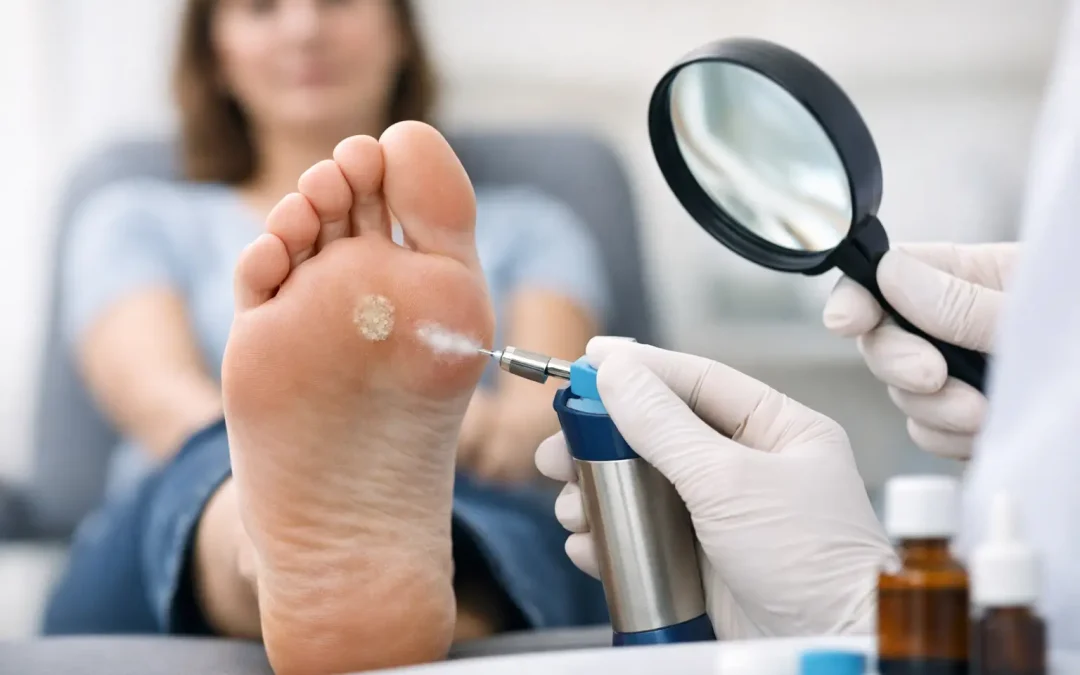
A verruca that has been there for months, hurts when you walk or keeps returning after treatment can feel far more frustrating than a minor skin problem. Persistent verruca clearance is rarely about finding one magic product. It starts with confirming exactly what is on the skin, understanding why it is proving stubborn and choosing a treatment plan you can realistically follow.
Verrucae are caused by strains of the human papillomavirus (HPV) entering the outer layer of skin, often through tiny breaks. They are common on weight-bearing areas of the foot, where pressure can make them grow inwards rather than standing proud. They may look rough or grainy, interrupt normal skin lines and show tiny dark dots, which are small blood vessels. Yet appearances can overlap with corns, callus and other skin lesions, so self-diagnosis is not always reliable.
Why some verrucae do not go away
The body’s immune system is ultimately responsible for recognising the virus and clearing it. This can happen without treatment, but the timing is unpredictable. Some verrucae settle within months; others remain for years. A lesion may be particularly persistent when it is covered by hard skin, repeatedly compressed by footwear or walking, or has been treated inconsistently because treatment has become uncomfortable.
Location matters too. A verruca beneath the ball of the foot or heel is exposed to pressure with every step. The hard skin that builds over it can disguise its true size and make topical preparations less effective unless it is carefully reduced first. Clusters of small lesions, sometimes called mosaic verrucae, can also be more difficult to manage than a single isolated lesion.
There is no single treatment that works best for every person. Age, pain levels, the number and position of lesions, previous treatment, skin health and your ability to attend appointments all affect the right approach. For people with diabetes, impaired circulation, reduced sensation or a weakened immune system, it is especially important not to use strong over-the-counter acids without professional advice.
Persistent verruca clearance begins with a proper assessment
At a podiatry assessment, the first task is to establish whether the lesion is genuinely a verruca. A podiatrist will examine the pattern of skin lines, the surface texture and how the area responds to gentle pressure. Corns often hurt with direct pressure, while verrucae can be more uncomfortable when squeezed from the sides, although this is not a rule to rely on at home.
Hard skin may be gently removed to reveal the lesion more clearly and reduce pressure-related discomfort. Your podiatrist will also ask how long it has been present, whether it is spreading, what you have already tried and whether it prevents you from wearing certain shoes, exercising or standing comfortably at work.
Occasionally, a lesion that changes quickly, bleeds unexpectedly, ulcerates or has an unusual appearance needs further medical assessment rather than repeated verruca treatment. Clear diagnosis protects you from spending time and money treating the wrong problem.
Treatment options for a persistent verruca
Treatment should be chosen as an informed decision, not as a sales pitch. The aim may be complete clearance, reduced pain while your immune system responds, or both. Your podiatrist should explain the expected process, likely discomfort, costs and what happens if the first option does not give the desired response.
Topical treatments and regular skin reduction
Salicylic-acid preparations can be helpful for some verrucae, particularly when used consistently and with appropriate reduction of the overlying hard skin. They gradually break down thickened skin and can make the lesion more accessible to treatment. The trade-off is that they require patience and careful application over weeks or months. Acid placed on healthy skin can cause soreness, and it may not be suitable for everyone.
Professional debridement, meaning the careful removal of hard skin, can improve comfort quickly. It does not necessarily eradicate the virus by itself, but it can make a painful lesion less intrusive and support other treatments.
Success Rate: 53%
Cryotherapy and other destructive treatments
Freezing treatments are familiar to many patients, but results vary. The treatment needs to create a controlled injury to stimulate a response, which can be uncomfortable and may cause blistering afterwards. Several sessions are often needed, and a painful recovery may be inconvenient for runners, people who are on their feet all day or children with school and sports commitments.
Other treatments may be appropriate in selected cases. The right choice depends on the lesion and your medical history, rather than simply escalating to the strongest available option.
Success Rate: 39%
Swift microwave therapy
Swift is an advanced microwave treatment used for verrucae. It delivers a precise dose of microwave energy into the lesion, creating a local response intended to encourage the immune system to recognise the virus. The treatment itself is brief and does not involve cutting into the skin or leaving an open wound.
It can be a valuable option for longstanding, difficult verrucae, especially where repeated home treatment has not worked or where a patient wants to avoid the blistering associated with freezing. Most people experience a short, sharp sensation during application, and tenderness can follow. A course of treatments is usually advised, with appointments spaced apart to allow the immune response to develop.
Swift is not an instant cure and no reputable clinician should promise guaranteed clearance. Some verrucae respond well; others take longer or need a different strategy. Its advantage is that it offers a focused, technology-led option within a planned treatment pathway.
Success Rate: 83%
What to expect from a treatment plan
A good plan has checkpoints. At the beginning, photographs or measurements may be used to track change, particularly when a lesion is hidden under callus. You should know what improvement looks like: less pain on walking, restoration of normal skin lines, a reduction in the size of the lesion or fewer satellite verrucae.
Your podiatrist may recommend pressure relief, changes to footwear or a temporary insole if the verruca sits beneath a high-load area. This does not treat the virus directly, but it can make daily activity more comfortable while treatment progresses. For active patients, that practical support can be the difference between abandoning treatment and staying consistent.
At Eclipse Foot Clinic, treatment discussions are led by HCPC-registered podiatric assessment and clear explanations of the options available. If Swift is appropriate, you should understand why it has been recommended, how many sessions may be needed and what alternatives remain open to you.
Supporting clearance between appointments
Avoid picking, cutting or digging at a verruca. This can damage healthy skin, increase soreness and potentially spread viral particles to nearby skin. Keep feet clean and dry, cover the lesion if it is sore or likely to rub, and use footwear that reduces direct pressure where possible.
Verrucae can spread in moist communal areas, although the risk should be kept in perspective. Wearing pool shoes in changing rooms and around swimming pools is sensible, particularly if the skin is broken. Do not share files, pumice stones, socks or footwear used directly on the affected area.
If you are using a home preparation as part of an agreed plan, apply it exactly as directed and stop if the surrounding skin becomes very painful, inflamed or broken. Children may need help with application, both for safety and consistency.
When it is time to seek specialist help
Book an assessment if the lesion is painful, spreading, uncertain in diagnosis or has failed to improve after a sensible period of self-care. Seek prompt advice if there is bleeding, discharge, marked redness, heat, swelling or a sudden change in appearance. People with diabetes, poor circulation, neuropathy or immune suppression should arrange professional assessment before trying medicated verruca products.
A persistent verruca should not be allowed to dictate how far you can walk, whether you can train or which shoes you can wear. With an accurate diagnosis, a realistic treatment choice and review at the right intervals, you can move from endlessly managing the problem towards a clear plan for healthier, more comfortable feet.