
Laser Versus Tablets for Fungal Toenails
A thick, yellow or crumbly toenail can feel like a small problem until it catches in your socks, makes shoes uncomfortable or stops you wearing sandals. The question of laser versus tablets for fungal toenails is one we hear regularly, particularly from patients who have tried pharmacy treatments without seeing a meaningful change.
There is no single best option for every fungal nail. The right choice depends on how many nails are affected, how much of each nail is involved, whether the infection reaches the nail matrix, your general health and what matters most to you. A proper diagnosis comes first. Not every damaged-looking nail is fungal, and treating the wrong condition wastes time and money.
Why fungal toenails need an individual plan
Fungal nail infection, also known as onychomycosis, commonly begins after a fungal skin infection such as athlete’s foot. The fungus can enter through tiny breaks around the nail or beneath the nail plate. Warm, enclosed footwear, sweaty feet, communal changing areas, nail trauma and reduced circulation can all increase the risk.
However, fungal infection is not the only cause of a discoloured or thickened nail. Repeated pressure from running shoes, a previous injury, psoriasis, eczema and some circulation problems can create very similar changes. This is why an experienced podiatry assessment may include examining the skin and nails, discussing your medical history and, where appropriate, taking a nail sample for laboratory testing.
The aim is not simply to improve the appearance of the nail. It is to identify what is happening, reduce discomfort, prevent the infection spreading to other nails or family members, and give you a realistic treatment plan.
Laser versus tablets for fungal toenails: the key differences
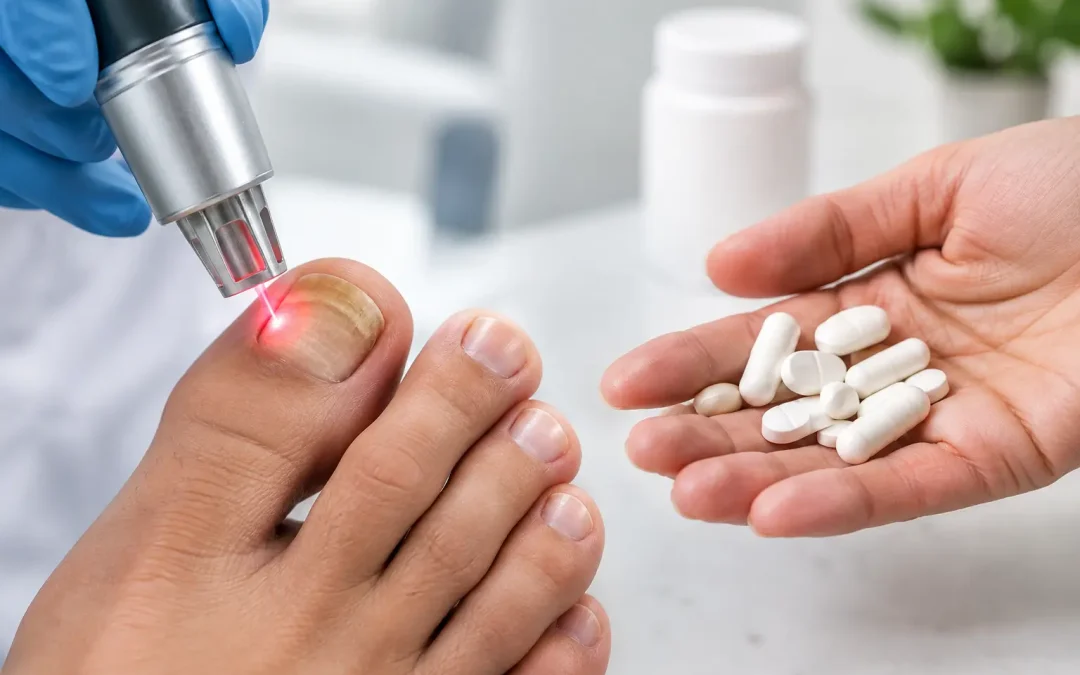
Laser treatment and oral antifungal tablets approach the infection in different ways. Laser directs controlled energy through the nail towards the affected area beneath it. Tablets circulate through the bloodstream and become incorporated into the growing nail, helping to treat the infection from within.
Both approaches can be appropriate, but they have different advantages, limitations and practical considerations.
Oral antifungal tablets
Prescription antifungal tablets, commonly terbinafine or itraconazole, are often considered when the infection is extensive, several nails are involved or the nail matrix appears affected. They can be a strong option because the medication reaches the nail as it grows.
The trade-off is that tablets are not suitable for everyone. Your prescriber will need to consider your health, other medication, allergies and relevant medical conditions. Blood tests may be advised before or during treatment. Some people experience side effects such as headache, nausea, changes in taste or skin reactions, although many tolerate treatment well.
Tablets also require patience. Even after the infection has been successfully treated, a big toenail may take 12 to 18 months to grow out fully. The clearer nail you want to see has to replace the damaged section gradually.
Laser fungal-nail treatment
Laser treatment is a useful alternative for people who cannot take oral medication, would prefer to avoid systemic medicines or have a smaller, more localised infection. At Eclipse Foot Clinic, laser treatment is delivered as part of a considered fungal-nail plan rather than as a one-size-fits-all cosmetic procedure.
The treatment is generally well tolerated. Most patients describe warmth or a brief pinching sensation rather than significant pain, and there is no recovery period that keeps you away from work, exercise or normal footwear. Because the laser is local to the nail, it does not carry the same potential for medicine interactions or systemic side effects as tablets.
That said, laser is not an instant fix. A course of sessions may be recommended, and the nail still needs time to grow out. Results can vary depending on nail thickness, the type and extent of infection, footwear habits and whether athlete’s foot is also present. Laser treatment is usually self-funded, whereas prescribed tablets may be available through your GP where clinically appropriate.
Which treatment is more effective?
This is where online comparisons can become misleading. Oral antifungal medication has a longer and stronger evidence base for many confirmed fungal nail infections, particularly more severe cases. But the best treatment is not automatically the treatment with the highest average success rate in a study.
For someone taking several medicines, living with liver disease, or concerned about tablet side effects, laser may offer a sensible route. For a healthy person with several thick, infected nails and confirmed fungus at the nail root, tablets may be the more practical starting point. In some cases, a combined approach is considered: reducing nail thickness professionally, treating any athlete’s foot, using laser or medication, and improving foot hygiene to reduce reinfection.
It is also worth being honest about recurrence. Fungal spores are common in shoes, socks, bathrooms and communal areas. Successful treatment does not make you immune to a future infection. Prevention is part of the treatment, not an optional extra.
What a specialist assessment can reveal
A fungal nail appointment should not begin and end with choosing a machine or a prescription. First, the nail needs to be assessed properly. Thickened nail can cause pressure, pain in footwear and difficulty cutting it safely. Reducing the thickness of the nail may bring immediate comfort, whether you later choose laser, tablets or monitoring.
Your podiatrist will also check for skin infection between the toes and on the soles of the feet. If athlete’s foot is left untreated, it can continually reinfect the nails. They may ask about sports, work footwear, swimming, nail trauma and any previous attempts at treatment. These details help establish why the problem has persisted.
For people with diabetes, reduced circulation, reduced sensation or a weakened immune system, nail and skin changes should be assessed promptly. A seemingly minor crack in the skin can become more significant when healing is impaired. In these cases, the priority is safe foot health as well as treating the appearance of the nail.
Getting better results from either option
Treatment works better when the environment around the nail is addressed. Keep feet dry, change socks daily and choose breathable footwear where possible. Rotate shoes so they can dry fully between wears, and use appropriate antifungal products if advised for shoes or skin.
Avoid sharing nail clippers, files or towels. Trim nails straight across where you can do so safely, but do not dig down the sides or aggressively remove crumbly material. If the nail is thick, painful or difficult to manage, regular podiatry care can prevent it catching, splitting or causing pressure in shoes.
It also helps to manage expectations. A healthier nail should grow from the base, but the old damaged section will not suddenly become clear. Progress is measured over months, often with photographs and follow-up reviews, not over a few days.
Making the decision with confidence
If your nail changes have been present for years, you may be tempted to accept them as permanent. That is understandable, especially after unsuccessful over-the-counter treatments. Yet an assessment can clarify whether fungus is truly the cause and whether a more targeted option is worthwhile.
Laser may suit you if you want a local treatment without oral medication. Tablets may suit you if infection is widespread and you are medically able to take them. Sometimes the most valuable first step is professional nail reduction and a clear diagnosis before committing to either.
The goal is simple: comfortable feet, manageable nails and a plan that fits your health and lifestyle. With the right diagnosis and a realistic approach, you can move towards clearer, healthier-looking nails without guessing your way through the treatment aisle.