
What Causes Recurrent Ingrown Toenails?
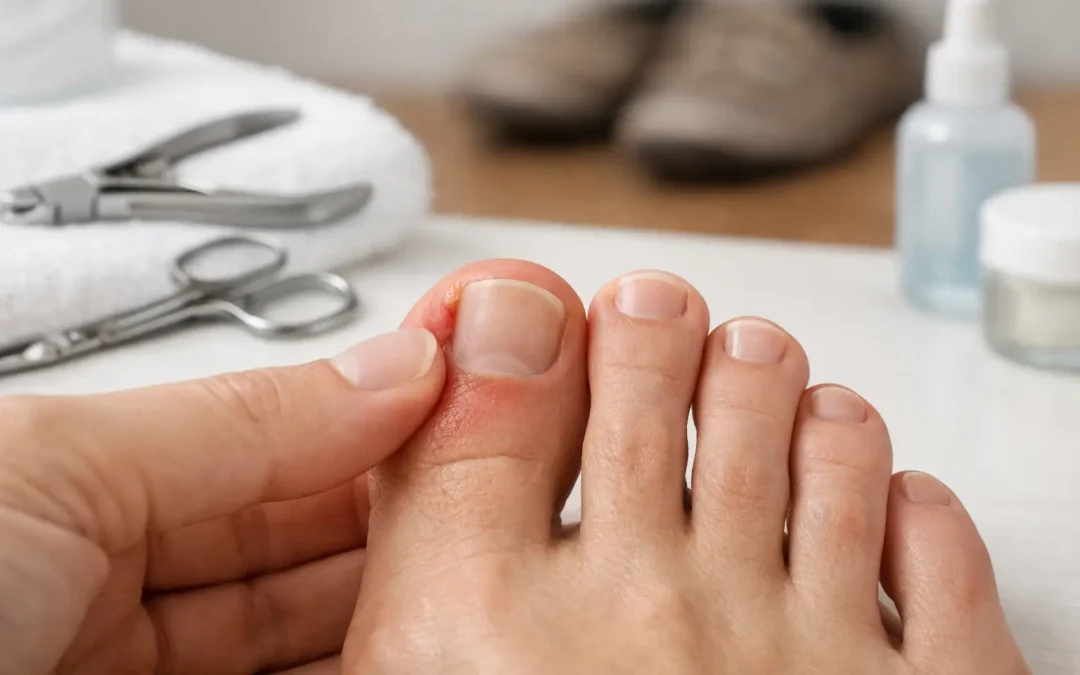
A toe that repeatedly catches on socks, throbs in shoes or leaks after a long walk is more than a nuisance. If you are asking what causes recurrent ingrown toenails, the answer is rarely simply that you have cut one nail incorrectly. Repeat episodes usually mean that the shape of the nail, the toe, the footwear or the way pressure travels through your foot is allowing the nail edge to keep breaking into the surrounding skin.
An ingrown toenail occurs when the side of a nail presses into, or pierces, the nail fold. The body responds with inflammation: tenderness, redness and swelling. If bacteria enter the damaged skin, there may also be discharge, bleeding, odour or a build-up of proud, fragile tissue around the nail edge. The big toe is most often affected, although other toes can develop the same problem.
A one-off flare-up can sometimes settle with prompt professional care. When it returns in the same place, however, treating only the sore edge may bring short-term relief without changing the reason it developed.
What causes recurrent ingrown toenails?
Recurrent ingrown toenails are usually caused by a combination of anatomy and repeated pressure. Some people naturally have a more curved, broad or fan-shaped nail plate that rolls towards the skin as it grows. Others have fleshy nail folds, a toe shape that crowds the nail, or a big toe that rotates slightly because of its position or a bunion. None of these features means you have done anything wrong, but they can make recurrence much more likely.
Nail growth also matters. A nail that has been damaged by a knock, previous infection or repeated trauma can grow unevenly. A sharp nail spicule – a tiny sliver left at the side of the nail – may remain hidden beneath the skin and continue to irritate it as the nail advances. This is one reason a toe can appear better for several weeks, then become painful again.
The key is to identify whether the recurring problem is driven mainly by nail shape, nail-fold anatomy, external pressure or a mixture of all three. That determines whether conservative treatment is likely to be enough or whether a more permanent solution should be considered.
Cutting the nail too short or down the sides
Trimming the corners deeply is a common trigger, particularly when trying to remove a painful edge at home. The corner can be left sharp, or it can grow forward under the skin rather than beyond it. Cutting a V into the middle of the nail does not change how the sides grow and can weaken the nail unnecessarily.
The aim is generally to cut toenails straight across, without digging into the sides. However, good nail-cutting technique cannot fully overcome a strongly curved nail or persistent footwear pressure. Recurrent cases deserve more than repeated trimming.
Tight footwear and repetitive activity
Shoes with a narrow or shallow toe box compress the toes and push the nail fold against the nail edge. This is particularly relevant for people who spend long days in work shoes, safety footwear, boots or formal shoes, and for runners whose feet swell during exercise. Even a well-fitted shoe can become problematic if the toe repeatedly hits the front on downhill walks or during court sports.
Active patients sometimes notice that an ingrown toenail settles during a quieter period and returns as training increases. The issue may be shoe fit, but it can also reflect how the foot moves inside the shoe. Toe deformities, excessive pronation, reduced joint movement and an altered gait can all change pressure around the big toe.
Trauma, sweating and damaged skin
A stubbed toe, a dropped object or repeated impact from sport can alter nail growth. Heavy sweating can soften the skin beside the nail, making it easier for the edge to penetrate. Picking at the nail, attempting to cut beneath it or using sharp tools to remove a corner creates another route for irritation and infection.
Fungal nail infection may contribute too. A thickened, brittle or distorted nail is harder to cut accurately and may exert more pressure on the surrounding skin. It is not the cause of every ingrown nail, so it should be assessed rather than assumed.
Health factors that affect healing
Poor circulation, diabetes, reduced sensation and conditions that suppress the immune system can make a small nail wound more serious and slower to heal. These factors do not necessarily cause the nail to grow in, but they change the risk attached to it. People with diabetes should not attempt to remove an ingrown section themselves, particularly if there is broken skin, redness or discharge.
Children and teenagers can also experience recurrent ingrown toenails, often as their feet grow quickly, sport participation rises and shoes become tighter. Early assessment can prevent a painful problem becoming a cycle of missed activities, infection and repeated antibiotics.
Why home treatment may not stop it returning
Soaking the toe, using antiseptic and changing to roomier footwear may ease mild inflammation. These measures can be useful while waiting for an appointment, but they cannot remove a hidden nail spicule, straighten a significantly curved nail or resolve excess pressure created by toe position.
Trying to cut out the affected corner may make the situation worse. It can leave a jagged edge below the skin, cause bleeding and make the nail fold more inflamed. Cotton, dental floss and improvised splints are also unreliable where there is significant pain, infection or tissue overgrowth.
Antibiotics may be appropriate when there is spreading infection, but they do not correct the physical cause of an ingrown nail. If the nail edge remains embedded, symptoms can return once the course is finished. This is why a practical examination and a clear treatment plan are more valuable than repeatedly managing flare-ups alone.
Assessment looks beyond the painful nail edge
A podiatry assessment starts with the toe itself: which border is involved, whether there is a spicule, whether infection is present and how much the nail is curved or thickened. The clinician will also consider your footwear, work demands, exercise, previous injuries, nail-cutting habits and the pattern of recurrence.
Where pressure or movement appears to be a factor, assessment of foot posture, toe alignment and walking mechanics may be helpful. For someone who runs, plays sport or has a bunion, this wider view can reveal why one side of one toe keeps being affected. It also prevents a treatment plan from being based on guesswork.
At Eclipse Foot Clinic, treatment choices are explained clearly, from careful conservative nail care and pressure reduction to a minor surgical procedure where recurrence is persistent. The right option depends on the condition of the nail and skin, your health, your activities and how often the problem has returned.
When partial nail surgery may be the sensible option
For a repeatedly ingrown border, partial nail avulsion is often the most predictable long-term treatment. Under local anaesthetic, the problematic narrow section of nail is removed. A chemical may then be applied to the nail matrix – the growth area – to prevent that section from growing back. The rest of the nail remains in place, so the toe still looks and functions like a normal toenail, just slightly narrower.
This is not automatically necessary after a first episode. Conservative management can be very effective when a nail has grown in because of temporary trauma, poor trimming or an isolated footwear issue. Yet if the same border repeatedly becomes painful or infected, continuing to cut it back may prolong the problem rather than solve it.
Recovery plans vary, but usually include a dressing regime, advice about keeping the toe clean and dry as directed, and guidance on returning to work, sport and footwear. A clinician can advise whether your particular job, health conditions or activity schedule requires extra caution.
Preventing the next flare-up
Prevention is most effective when it matches the cause. Choose footwear with enough width and depth for the toes, especially for exercise and long working days. Leave a little room at the front of the shoe and review fit if your feet swell, you have changed activity levels or you are wearing thicker socks.
Cut nails straight across when you can reach them safely, and file sharp corners rather than digging them out. If your nails are thick, curved or difficult to manage, regular professional nail care is safer than forcing the issue at home. Addressing fungal changes, managing excessive sweating and reviewing sport footwear can also reduce irritation.
Seek prompt advice if pain is increasing, the redness is spreading, there is pus or bleeding, or you feel unwell. For anyone with diabetes, poor circulation or reduced sensation, even a seemingly minor ingrown toenail warrants early professional assessment.
A recurring ingrown toenail is a sign that something is repeatedly loading, shaping or irritating that nail edge. Finding that reason can turn a cycle of painful temporary fixes into a treatment plan that lets you walk, work and exercise comfortably again.