
Swift Cryotherapy Comparison for Verrucae
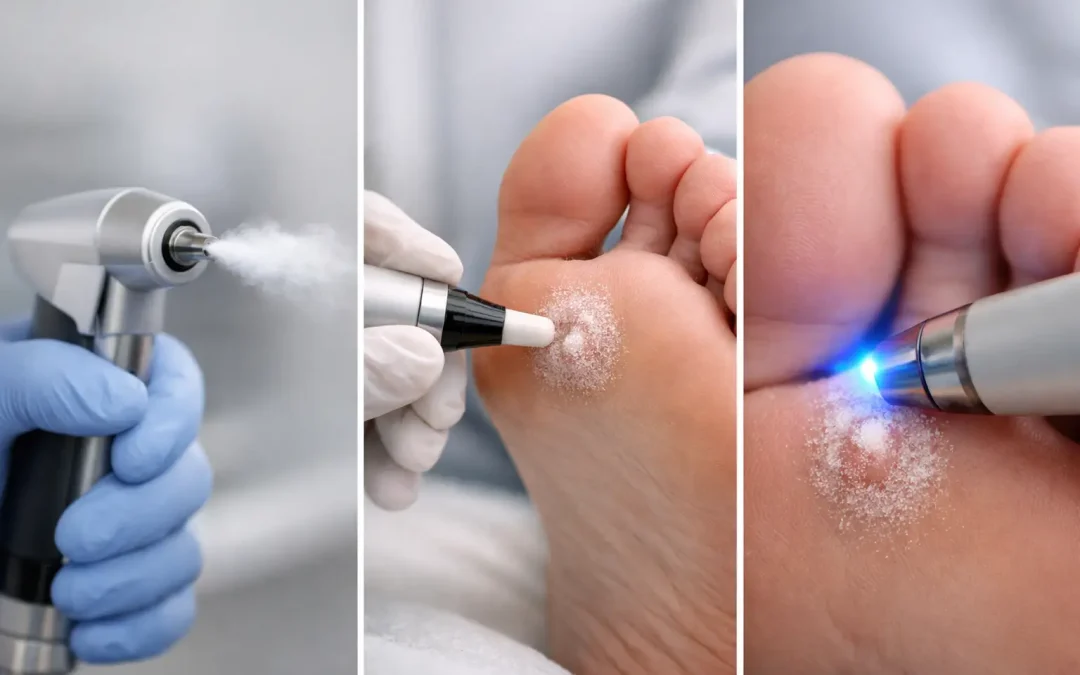
A Swift/Cryotherapy comparison can be confusing from the outset, because Swift is not actually cryotherapy. Cryotherapy freezes a verruca with liquid nitrogen. Swift uses precisely delivered microwave energy to stimulate an immune response around the infected tissue. Both are used for stubborn verrucae, but they feel different, follow different treatment schedules and may suit different patients.
For anyone who has tried pharmacy treatments, covered a verruca for weeks or months, or simply wants it dealt with before a holiday, sports season or family event, the right choice starts with a clear diagnosis. Verrucae can resemble corns, callus and other skin lesions. A podiatry assessment helps confirm what is causing the discomfort before treatment begins.
Swift cryotherapy comparison: microwave versus freezing
A verruca is caused by the human papillomavirus, or HPV, entering the outer layer of skin. It often appears on the sole of the foot, where pressure can push it inwards. Some are painless, while others feel as though there is a small stone under the foot, particularly during walking, running or standing at work.
Traditional cryotherapy applies liquid nitrogen to freeze the lesion. The intense cold damages the treated tissue, which then often blisters and falls off. It has been used for many years and may be appropriate for some individual verrucae.
Swift treatment is different. A clinician places a small probe over the verruca and delivers a brief pulse of microwave energy. Rather than freezing or cutting away skin, the treatment aims to create a localised response that prompts the immune system to recognise and tackle the viral infection. The treatment itself is very quick, although the sensation can be sharp and hot for a few seconds.
Neither approach is a guaranteed cure. Verrucae vary significantly in age, size, location and how strongly an individual immune system responds. Children, adults with persistent lesions, active people and those with multiple verrucae may all need different plans.
How the treatments compare in day-to-day life
Sensation during and after treatment
Cryotherapy can sting during application and may leave the area sore, blistered or tender afterwards. The extent of the reaction depends on the freeze time, the site and the surrounding skin. A blister can be a normal treatment response, but it may be inconvenient if the verruca is on a weight-bearing part of the foot.
Swift is often described as an intense, brief heat sensation. There is usually no wound, dressing or blistering, and many patients return to usual footwear and activities straight away. Tenderness can occur, especially with a deeper verruca or a lesion on a pressure point, but downtime is typically limited.
This does not mean Swift is painless or that cryotherapy is always difficult to tolerate. Pain thresholds differ, and so does the practical impact of a sore foot. For a runner in the middle of training, avoiding post-treatment blistering may matter. For someone with one small verruca who is comfortable with freezing, cryotherapy may still be a reasonable option.
Number and timing of appointments
Cryotherapy commonly requires repeat sessions, usually spaced several weeks apart. The exact number depends on the response and the treatment protocol. Over-treating can damage healthy skin, so allowing tissue to recover between sessions is part of the process.
Swift treatment is often planned as a course of appointments, commonly around four weeks apart, with progress reviewed throughout. Some verrucae respond sooner; others need further treatment or a combined approach. The key advantage is not that every lesion disappears after one visit, but that the clinician can monitor response and adjust the plan appropriately.
A persistent verruca that has been present for years may require patience whichever treatment is selected. Claims of an instant fix should be treated carefully.
Skin damage and healing
With cryotherapy, the intended freeze can affect the treated area and sometimes surrounding skin. Blistering, redness and temporary discomfort are possible. It is important not to burst a blister or pick at treated tissue, as this may increase the risk of infection.
Swift does not rely on creating a visible blister or removing layers of skin. That can make it attractive for patients who want minimal interruption to work, exercise or footwear. However, it is still a medical treatment and should be delivered following a proper assessment, especially where there is reduced sensation, poor circulation, diabetes or a history of slow healing.
Cost and value
Home treatments are understandably appealing because they cost less initially. But value is not simply the price of one product or appointment. Consider how long the verruca has persisted, whether treatment has repeatedly failed, the discomfort it causes and the impact on your activity.
Swift uses specialist equipment and is generally priced as a private clinical treatment course. Cryotherapy may have a lower per-session cost, but can involve repeat visits and healing time. The most sensible option is the one that is clinically suitable, manageable for your routine and clearly explained before you commit.
How Swift compares with acids and home treatments
Salicylic acid is a common over-the-counter verruca treatment. It works by gradually softening and removing infected outer skin. Used carefully and consistently, it can help with some uncomplicated verrucae. The challenge is consistency: daily application, gentle filing where advised and protecting normal skin can be hard to sustain.
Acid treatments are less suitable where diagnosis is uncertain, the skin is broken, circulation is poor or sensation is reduced. They should not be used casually on a lesion that may not be a verruca.
Duct tape, freezing kits and online remedies attract attention because they are convenient. Results are variable, and some can irritate healthy skin without addressing the problem. A freezing kit purchased for home use is also not equivalent to clinical liquid-nitrogen cryotherapy.
For a new, painless verruca, watchful waiting may be appropriate. Many clear naturally, particularly in children. For a painful lesion, a spreading cluster, an older verruca or one that has resisted careful self-care, a podiatrist can offer a more informed route forward.
Who may be better suited to Swift treatment?
Swift may be particularly worth discussing if your verruca is stubborn, painful under pressure or limiting sport and day-to-day comfort. It can also be useful where previous acid treatment has caused irritation, or where you would prefer to avoid a blistering response associated with freezing.
The location matters. A small verruca on the heel is managed differently from a mosaic verruca across the forefoot. So does your lifestyle. A child anxious about treatment, a runner with an upcoming event and someone who spends long shifts on their feet each need a plan built around more than the lesion itself.
There are occasions when a clinician may recommend a different treatment, combine approaches or advise against treatment for now. Diabetes, peripheral vascular disease, neuropathy, immune suppression, pregnancy and certain medications can affect the safest option. This is why a clinical history is not an unnecessary extra – it protects your feet.
What happens at a podiatry appointment?
At Eclipse Foot Clinic, assessment starts by examining the lesion and surrounding skin, asking about pain, duration, previous treatments and relevant medical history. A verruca often has interrupted skin lines and tiny pinpoint blood vessels, but diagnosis is made from the overall clinical picture rather than one feature alone. Eclipse Foot Clinic does not offer Cryotherapy, as the success rate is substantially lower than Swift.
If Swift is suitable, the treatment process, expected sensation, likely appointment schedule and costs will be explained clearly. You should also be told what to look out for afterwards and when to contact the clinic. If topical treatment or simple monitoring is the better fit, that should be discussed without pressure.
Avoid cutting, digging or aggressively filing a suspected verruca at home. Keep the foot clean, avoid sharing towels or footwear and cover the lesion in communal changing areas if possible. These simple steps reduce the chance of spreading the virus to others or to another area of your own foot.
A painful verruca does not need to become the thing you plan your shoes, walks or training around. The useful question is not whether Swift is universally better than cryotherapy, but which treatment gives your particular foot the best chance of a comfortable, practical result.